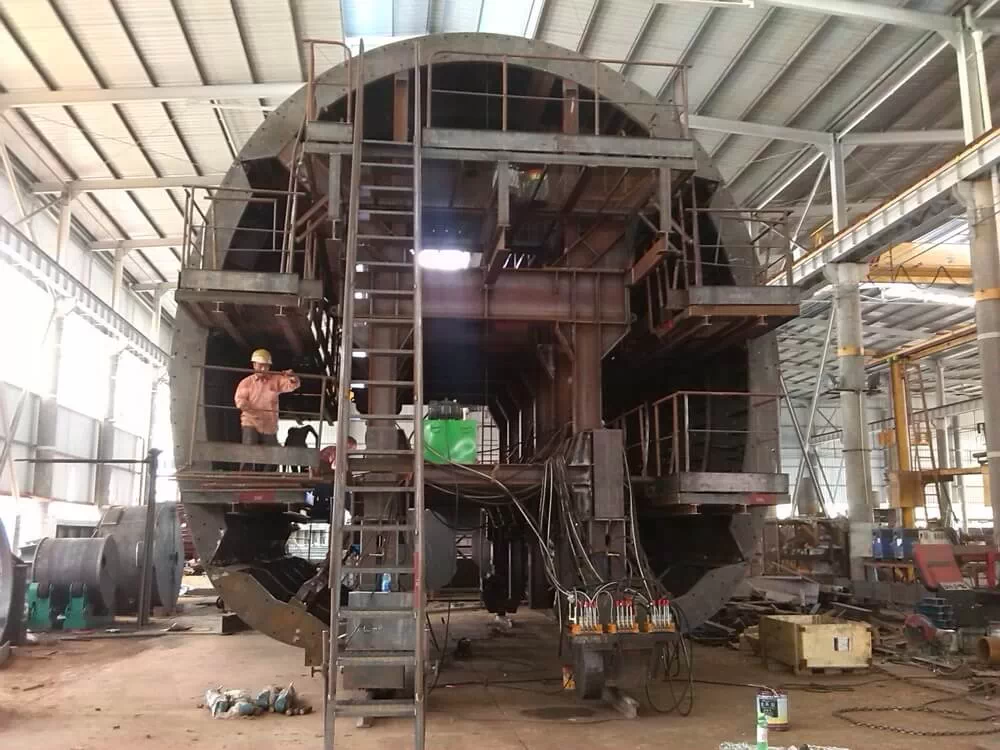
Steel Structure Manufacturer Guide: How Steel Structures Are Manufactured, Fabricated, Timed, and Equipped
Steel structure manufacturer selection plays a critical role in the success of industrial, commercial, and civil construction projects. Whether the project involves a warehouse, large-span workshop, aircraft hangar, steel office building, supermarket, or road and bridge construction, the manufacturing process behind the steel components directly affects quality, dimensional accuracy, delivery time, installation efficiency, and long-term structural performance.
For project owners, EPC contractors, builders, and procurement managers, understanding how steel structures are manufactured is essential when evaluating suppliers. A reliable steel structure manufacturer should not only provide fabricated steel members, but also offer detailed design support, accurate material procurement, professional production control, stringent inspection, and reliable global delivery. In overseas construction projects especially, these capabilities can determine whether the project proceeds smoothly or faces delays, rework, and cost overruns.
RH Engineering Co., Ltd. is a professional steel structure and steel formwork design and manufacturing company dedicated to providing high-quality steel structure products and integrated solutions for global construction, bridge, industrial plant, and related fields. Founded in 2016 and supported by more than ten years of industry experience, RH Engineering serves industrial, commercial, and civil sectors with products used in warehouses, workshops, aircraft hangars, office buildings, supermarkets, and infrastructure projects. Its 10,000-square-meter production and painting workshop, advanced laser cutting machines, automated welding robots, and comprehensive quality management system make it a strong example of how a modern steel structure manufacturer operates.
In this guide, we will answer four important questions:
- How are steel structures manufactured?
- What is the process of steel structure fabrication?
- How long does steel structure manufacturing take?
- What equipment is used in steel structure manufacturing?
We will also expand on related topics such as quality control, project planning, production efficiency, inspection, and supplier evaluation so that the article becomes a complete, high-value resource for ranking and conversion.
How are steel structures manufactured?
Steel structures are manufactured through a controlled process that starts with design review and material procurement, then moves through cutting, fitting, welding, drilling, assembly, inspection, surface treatment, packing, and delivery. A professional steel structure manufacturer follows this workflow systematically to ensure that every component meets the project drawings, technical standards, and installation requirements.
At a basic level, steel structure manufacturing transforms raw steel materials into finished structural members such as columns, beams, rafters, bracings, trusses, connection plates, and prefabricated assemblies. However, in real industrial practice, the process is much more complex than simply cutting and welding steel.
Steel structure manufacturing begins with engineering and planning
Before manufacturing starts, the project design must be translated into practical production information. This stage often includes drawing review, shop drawing preparation, bill of materials confirmation, production planning, and technical coordination with the client.
A qualified steel structure manufacturer should be able to provide detail shop drawings based on the client’s design. This is one of RH Engineering’s service strengths. Accurate detailing is essential because the workshop can only fabricate correctly when dimensions, hole positions, weld requirements, and assembly relations are fully defined.
Raw material procurement is the foundation of quality
The next stage is procurement of steel plates, sections, pipes, and related materials. Material quality affects strength, weldability, durability, and compliance with project specifications. RH Engineering notes that it can provide steel materials in accordance with European, Australian, and American standards, which is important for overseas projects that require EN, AS, or ASTM compliance.
A reliable steel structure manufacturer should ensure that purchased materials match the specified grade, thickness, and standard before they enter production.
Materials are identified and stored in an organized way
Material management is often overlooked by buyers, but it is a critical part of manufacturing control. RH Engineering’s material workshop stacks materials separately by type and specification with labels affixed. This prevents material confusion and helps keep production organized.
When a manufacturer maintains proper storage and traceability, the risk of using incorrect materials is reduced significantly.
Cutting and machining convert raw steel into usable components
After material preparation, steel members are cut according to production drawings. RH Engineering uses advanced laser cutting equipment to ensure precise dimensions and clean edges. Cutting quality affects later stages such as fit-up, welding, and assembly.
Depending on the project, cutting may include:
- plate cutting
- profile cutting
- hole making
- edge preparation
- beveling for welding
- trimming and shaping
For a professional steel structure manufacturer, precision at this stage is essential because any error can carry through the rest of the production process.
Welding and assembly create the structural member
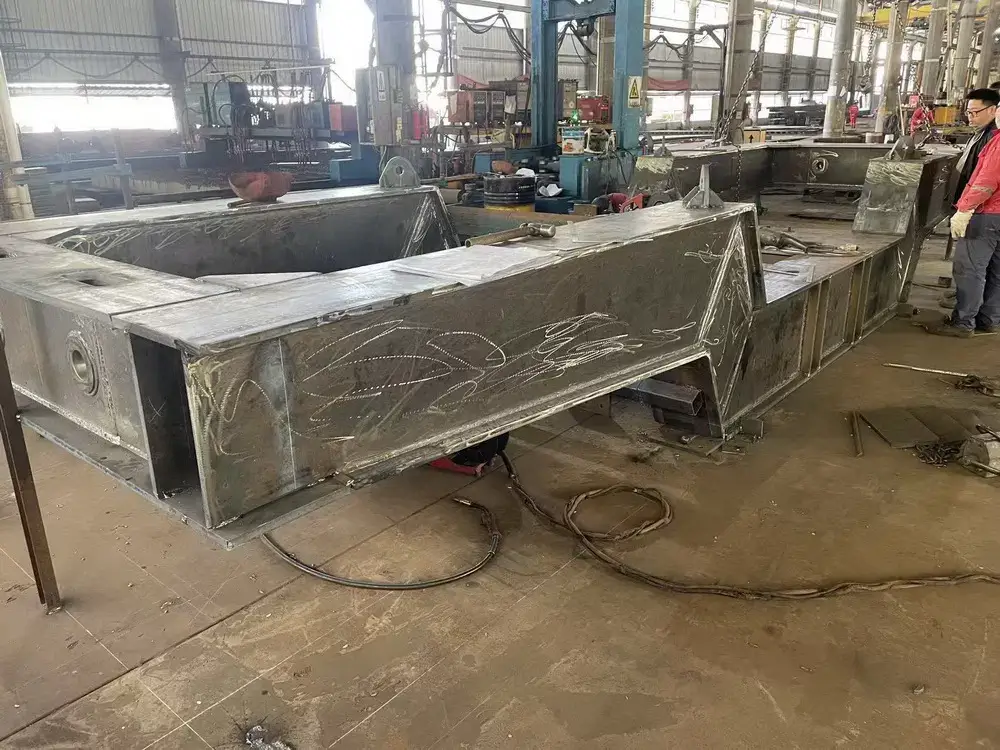
After components are cut and prepared, they are assembled and welded into final structural forms. RH Engineering’s welding workshop uses robotic welding to enhance joint strength, consistency, and structural integrity. Welding is one of the most important stages because it affects both strength and dimensional accuracy.
Manufacturers must control welding sequence, alignment, and heat input to reduce distortion. After welding, members may require straightening, grinding, or dimensional correction before moving to the next stage.
Inspection and trial assembly verify manufacturing quality
A reliable steel structure manufacturer does not wait until shipment to check the finished product. RH Engineering states that comprehensive inspections guarantee each product meets standards and drawing specifications, and that trial assembly confirms the overall dimensions meet the drawing requirements.
Inspection may include:
- dimensional inspection
- weld inspection
- surface condition checks
- hole alignment checks
- trial fitting of connected parts
- review of marking and labeling
Surface treatment improves durability
Once steel members pass fabrication and inspection, they often receive surface treatment such as painting or hot-dip galvanizing. RH Engineering can provide both options. Surface treatment protects steel from corrosion and extends service life, especially for structures used in humid, coastal, industrial, or exposed outdoor environments.
Packing and logistics complete the manufacturing cycle
Finally, components are packed, loaded, and shipped to the project site. RH Engineering’s location near the seaport supports efficient global delivery, and the company partners with trusted shipping companies to provide reliable transportation solutions.
In summary, steel structures are manufactured through a complete system of design, procurement, fabrication, inspection, finishing, and delivery. A capable steel structure manufacturer manages all these stages carefully to ensure performance, compliance, and smooth installation.
What is the process of steel structure fabrication?
The process of steel structure fabrication is the detailed workshop workflow used to turn engineering drawings into finished steel components ready for installation. While manufacturing is the broader concept, fabrication usually refers specifically to the workshop production steps.
A professional steel structure manufacturer typically follows a structured fabrication process that can be broken down into clear stages.
1. Drawing review and fabrication planning
Fabrication begins with reviewing design drawings, specifications, and client requirements. Shop drawings and production schedules are prepared, and technical details are clarified before steel enters the workshop.
This stage reduces the risk of errors and helps production teams understand the exact requirements for each component.
2. Material receiving and inspection
Once raw steel arrives at the factory, it is checked against procurement documents and project requirements. Material type, size, thickness, and visible condition should all be verified. Proper labeling and separation are essential.
RH Engineering emphasizes organized material handling in its workshop, which supports better production control and traceability.
3. Cutting and part preparation
Steel plates and sections are cut to the required dimensions. RH Engineering’s high-power laser cutting machines help ensure precise dimensions and clean cutting quality. This is especially important for parts requiring tight tolerances or repeated identical shapes.
Part preparation may also include:
- drilling or punching
- edge milling
- bevel preparation
- slot creation
- marking for assembly
4. Fit-up and positioning
At this stage, cut parts are placed into their required positions according to the drawings. Workers or fixtures hold them in place before welding. The purpose of fit-up is to confirm alignment, gap control, angle accuracy, and connection positioning.
Good fit-up is a key sign of an experienced steel structure manufacturer, because poor fit-up creates welding defects, dimensional inaccuracy, and assembly problems later.
5. Welding and joining
Once the components are properly positioned, welding joins them into a structural member. RH Engineering’s automated welding robots help improve consistency and structural integrity. Welding may involve different procedures depending on the steel type, joint design, and project requirements.
This stage often represents one of the highest-value operations in steel structure fabrication because it combines technical skill, process control, and quality assurance.
6. Correction and finishing
After welding, fabricated members may be checked for distortion or deviation. Correction procedures may be used if necessary. Surface finishing can include grinding weld areas, cleaning the steel, and preparing it for coating or galvanizing.
7. Inspection and measurement
Fabricated members are inspected to confirm compliance with drawings and standards. RH Engineering’s inspection workshop performs comprehensive checks, and its assembly workshop conducts trial assembly to verify overall dimensions.
Inspection is not only about detecting mistakes. It is also about documenting compliance and ensuring the finished product is ready for shipment and installation.
8. Surface treatment
Surface treatment comes after fabrication and inspection. Painting and hot-dip galvanizing are two common methods. RH Engineering provides both. The correct treatment depends on project environment, durability expectations, and client specifications.
9. Packing and shipment
The final fabrication stage is packing, marking, container loading, and shipment preparation. Good packing protects components during transport and supports easier unloading and erection on site.
Table: Typical steel structure fabrication process
| Fabrication Stage | Main Activities | Why It Matters |
|---|---|---|
| Drawing review | Shop drawings, planning, technical clarification | Prevents production errors |
| Material receiving | Material checking, labeling, storage | Ensures correct raw materials |
| Cutting | Laser cutting, profile cutting, hole making | Creates precise parts |
| Fit-up | Alignment and positioning before welding | Improves accuracy and weld quality |
| Welding | Joining components into final members | Determines strength and integrity |
| Correction | Straightening and finishing | Controls distortion and fit |
| Inspection | Dimension checks, weld checks, trial assembly | Verifies compliance |
| Surface treatment | Painting or galvanizing | Improves corrosion resistance |
| Packing and shipment | Marking, loading, logistics | Supports safe delivery |
How long does steel structure manufacturing take?
Steel structure manufacturing time depends on project size, design complexity, material availability, production capacity, inspection requirements, surface treatment, and shipping schedule. For small and relatively simple projects, production may take only a few weeks. For large, complex, or export-oriented projects, it can take significantly longer.
There is no single fixed answer, but a professional steel structure manufacturer should be able to provide a realistic production schedule after reviewing the drawings and specifications.
Main factors that affect steel structure manufacturing time
1. Project scale
A small steel platform or light industrial frame can usually be produced faster than a large warehouse, aircraft hangar, or bridge-related steel package. More tonnage means more cutting, welding, inspection, and logistics coordination.
2. Design complexity
Simple repetitive members are easier to fabricate quickly. Complex connections, custom geometries, large-span systems, or non-standard components increase engineering time and workshop hours.
3. Material procurement cycle
If the project requires special steel grades or materials that must comply with ASTM, EN, or AS standards, procurement may take longer. A capable steel structure manufacturer with strong supply chain management can reduce delays.
4. Workshop capacity and equipment
Production speed depends heavily on factory resources. RH Engineering’s 10,000-square-meter workshop, high-power laser cutting machines, automated welding robots, and organized production system help improve efficiency while maintaining quality.
5. Inspection and trial assembly requirements
Projects requiring more detailed inspection, trial assembly, or third-party verification may need additional production time. However, this extra time often reduces installation risk and costly field rework.
6. Surface treatment method
Painting usually has a different production timeline than hot-dip galvanizing. Drying time, coating thickness requirements, or galvanizing coordination may affect the schedule.
7. Export packing and shipping arrangements
For overseas projects, manufacturing is only part of the timeline. Packing, container planning, customs documentation, and shipment booking also matter.
Typical timeline overview
Although actual timelines vary, the following table gives a general reference:
Table: Typical steel structure manufacturing timeline
| Project Stage | Typical Time Range | Notes |
|---|---|---|
| Drawing review and detailing | 3–10 days | Depends on project complexity |
| Material procurement | 7–20 days | May vary by grade and market supply |
| Cutting and part preparation | 5–15 days | Affected by quantity and accuracy requirements |
| Welding and fabrication | 7–25 days | Often the most labor-intensive phase |
| Inspection and trial assembly | 3–10 days | Longer if third-party inspection is required |
| Surface treatment | 3–10 days | Painting or galvanizing schedule may differ |
| Packing and shipment preparation | 2–7 days | Depends on export packaging needs |
How a steel structure manufacturer reduces lead time
An experienced steel structure manufacturer can shorten lead time by:
- preparing accurate shop drawings early
- controlling procurement efficiently
- using advanced cutting and welding equipment
- organizing material flow inside the workshop
- maintaining strict in-process inspection
- coordinating surface treatment and logistics in advance
RH Engineering’s experience in design, procurement, manufacture, and project construction management supports this integrated approach. Its location near the seaport also helps improve delivery efficiency for export projects.
Fast production should not mean low quality
Buyers should be cautious of unrealistic promises. A short lead time is only valuable if the fabricated steel still meets dimensional, welding, and coating requirements. The best suppliers balance speed with reliable process control.
What equipment is used in steel structure manufacturing?
The equipment used in steel structure manufacturing includes cutting machines, welding machines, assembly tools, inspection instruments, lifting equipment, and surface treatment systems. The exact combination depends on project type, product range, and production scale, but advanced equipment is a strong sign that a steel structure manufacturer can achieve better precision, consistency, and efficiency.
RH Engineering highlights several important pieces of workshop capability, including high-power laser cutting machines and automated welding robots. These are key indicators of a modern steel fabrication facility.
Laser cutting machines
Laser cutting machines are used to cut steel plates and profiles with high precision. They provide clean edges, accurate dimensions, and efficient processing for both standard and custom components.
RH Engineering’s cutting workshop uses advanced laser cutting to ensure precise dimensions and clean edges for all materials. For a steel structure manufacturer, this equipment improves both quality and productivity.
Automated welding robots
Welding robots are used to improve consistency in welding operations. They help produce more uniform welds, reduce variation, and enhance productivity in repeated fabrication tasks.
RH Engineering’s robotic welding workshop strengthens joint quality, consistency, and structural integrity. Automated welding is particularly useful for manufacturers serving international markets where repeatable quality is highly valued.
Material handling and storage systems
Steel structure manufacturing requires organized storage racks, lifting tools, and internal transport systems to move raw materials and fabricated components safely and efficiently. RH Engineering’s material workshop uses separate stacking and labeling by type and specification, which is part of effective material control.
Assembly equipment
Assembly tables, jigs, fixtures, and measuring systems are used to position and hold components before welding. These tools help maintain alignment and dimensional accuracy.
RH Engineering’s assembly workshop performs trial assembly, indicating that the company uses assembly control methods to verify fit and overall dimensions.
Inspection equipment
Inspection equipment may include:
- measuring tapes and calibrated rulers
- squares and levels
- welding gauges
- thickness gauges
- alignment checking tools
- dimensional templates
Comprehensive inspection is essential for verifying product compliance. RH Engineering states that its inspection workshop guarantees products meet standards and drawing specifications.
Painting and surface treatment equipment
Painting workshops typically use cleaning systems, spray equipment, drying areas, and coating thickness controls. Surface treatment is important for corrosion protection and long-term durability.
RH Engineering operates a production and painting workshop and can provide both painting and hot-dip galvanizing.
Lifting and workshop support equipment
Cranes, forklifts, hoists, and transport carts are all important in steel structure manufacturing. They help move heavy members safely between workstations and support productivity in large fabrication workshops.
Table: Equipment used by a modern steel structure manufacturer
| Equipment Type | Main Function | Benefit to Production |
|---|---|---|
| Laser cutting machines | Accurate cutting of steel plates and sections | High precision, clean edges, efficiency |
| Automated welding robots | Repeatable welding of structural members | Better consistency and weld quality |
| Material storage systems | Organize and identify raw materials | Improves traceability and workflow |
| Assembly fixtures and jigs | Position components during fit-up | Enhances dimensional accuracy |
| Inspection tools | Check dimensions, welds, and compliance | Ensures quality before delivery |
| Painting equipment | Apply protective coatings | Improves corrosion resistance |
| Lifting equipment | Move heavy steel members | Supports safe and efficient workflow |
Why equipment matters when choosing a steel structure manufacturer
Not all factories are the same. Some rely heavily on manual operations with limited control, while others invest in advanced equipment and regulated workshop systems. When evaluating a steel structure manufacturer, equipment should be considered together with team experience, quality control, and project management capability.
RH Engineering combines advanced equipment with a professional team in design, fabrication, and quality control. This combination is important because equipment alone does not guarantee quality; it must be supported by proper management and skilled personnel.
Why RH Engineering is a reliable steel structure manufacturer
Based on the company information provided, RH Engineering demonstrates several strengths that support its position as a dependable steel structure manufacturer for global projects:
- Founded in 2016 with more than ten years of experience in steel structure, steel formwork, and construction equipment
- Serves industrial, commercial, and civil fields
- Has a 10,000-square-meter production and painting workshop
- Uses high-power laser cutting machines for precise material cutting
- Uses automated welding robots for improved welding quality
- Maintains a comprehensive quality management system
- Performs stringent inspections before delivery
- Offers detail design according to client drawings
- Provides materials according to European, Australian, and American standards
- Supports painting and hot-dip galvanizing
- Located near the seaport for efficient global logistics
These capabilities are especially important for overseas buyers who need quality, delivery reliability, and efficient coordination from one supplier.
FAQ: Steel structure manufacturer and fabrication process
What does a steel structure manufacturer do?
A steel structure manufacturer designs, details, procures, fabricates, inspects, and delivers steel components used in industrial, commercial, and civil construction projects.
How are steel structures manufactured in a modern factory?
They are manufactured through design review, material procurement, cutting, fit-up, welding, inspection, surface treatment, and shipment preparation.
What is the most important step in steel structure fabrication?
There is no single most important step, but drawing accuracy, material quality, welding control, and inspection are all essential to producing reliable structural steel components.
How long does steel structure fabrication usually take?
It depends on project size and complexity. Small projects may take a few weeks, while larger export projects may take several weeks or longer, depending on procurement, fabrication, inspection, and shipping requirements.
What equipment should a professional steel structure manufacturer have?
Important equipment includes laser cutting machines, welding systems, assembly fixtures, inspection tools, painting equipment, and lifting systems.
Why is laser cutting important in steel structure manufacturing?
Laser cutting helps ensure precise dimensions, clean edges, and better consistency, which improves fit-up, welding quality, and final assembly.
Why do some manufacturers use robotic welding?
Robotic welding improves consistency, repeatability, and efficiency, especially in projects with repeated welding tasks and strict quality requirements.
How can I evaluate a steel structure manufacturer before placing an order?
You should review the factory’s equipment, engineering support, material procurement capability, inspection process, project experience, quality management system, and export logistics ability.
Conclusion
Choosing the right steel structure manufacturer means understanding not only what the supplier produces, but also how the steel is designed, fabricated, inspected, and delivered. Steel structures are manufactured through a complete system of engineering review, material procurement, precision cutting, fit-up, welding, assembly, inspection, surface treatment, and shipment preparation. The fabrication process requires both advanced equipment and disciplined management, while production lead time depends on project complexity, material supply, quality requirements, and logistics coordination.
For buyers seeking reliable results in industrial, commercial, and civil projects, it is important to work with a manufacturer that combines technical experience, workshop capability, quality control, and delivery efficiency. RH Engineering demonstrates these strengths through its professional team, 10,000-square-meter factory, laser cutting equipment, welding robots, strict inspection process, and integrated support for design, procurement, manufacturing, and project management.
Get a Quote from an Experienced Steel Structure Manufacturer
If you are looking for a professional steel structure manufacturer for warehouses, industrial workshops, aircraft hangars, steel office buildings, supermarkets, road and bridge construction, or customized overseas projects, RH Engineering is ready to support you. We provide detail design, material procurement, precision fabrication, strict inspection, surface treatment, and reliable global delivery based on your project specifications.
Send us your drawings, technical requirements, or inquiry today to get a fast and professional quotation. Working with an experienced steel structure manufacturer can help you improve quality, reduce project risk, and achieve more efficient construction results from factory production to on-site installation.