Steel structure manufacturer is one of the most important search terms for project owners, contractors, developers, engineers, and procurement managers looking for a reliable partner in modern construction. In today’s industrial, commercial, and civil building market, buyers are no longer searching only for a factory that can process steel. They want a steel structure manufacturer that can also support design coordination, custom solutions, technical drawings, material procurement, fabrication quality, and project execution.
Steel structure manufacturer is one of the most important search terms for project owners, contractors, developers, engineers, and procurement managers looking for a reliable partner in modern construction. In today’s industrial, commercial, and civil building market, buyers are no longer searching only for a factory that can process steel. They want a steel structure manufacturer that can also support design coordination, custom solutions, technical drawings, material procurement, fabrication quality, and project execution.
Whether the project is a warehouse, aircraft hangar, logistics center, industrial workshop, steel office building, supermarket, or bridge-related structure, choosing the right steel structure manufacturer has a direct impact on cost control, construction speed, dimensional accuracy, installation efficiency, and long-term performance. For many buyers, design capability is especially important at the early stage of a project. Before fabrication begins, many practical questions must be answered. Can a steel structure manufacturer provide design services? Do steel structure manufacturers offer custom design? Can manufacturers work from 3D drawings? What information is needed to start a steel structure project?
These questions are critical because they influence not only technical feasibility, but also project scheduling, procurement planning, communication efficiency, and the likelihood of avoiding delays or rework later. A professional steel structure manufacturer should not be viewed only as a production supplier. Instead, it should be seen as a technical and project-support partner that helps turn a concept, drawing, or engineering requirement into a buildable and high-quality steel structure system.
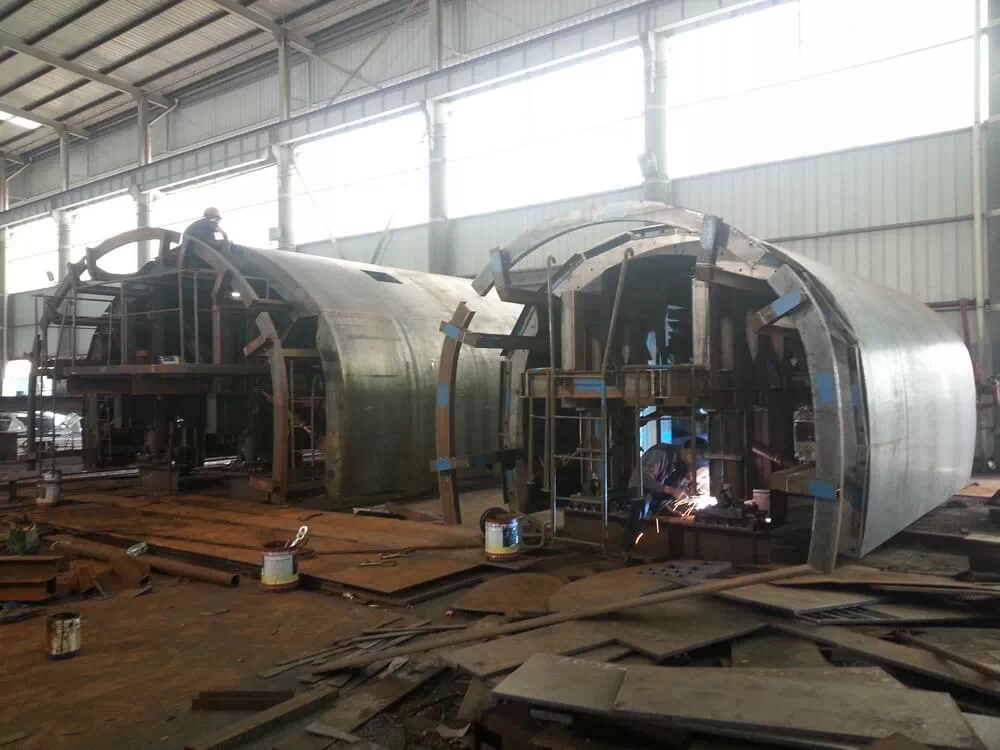
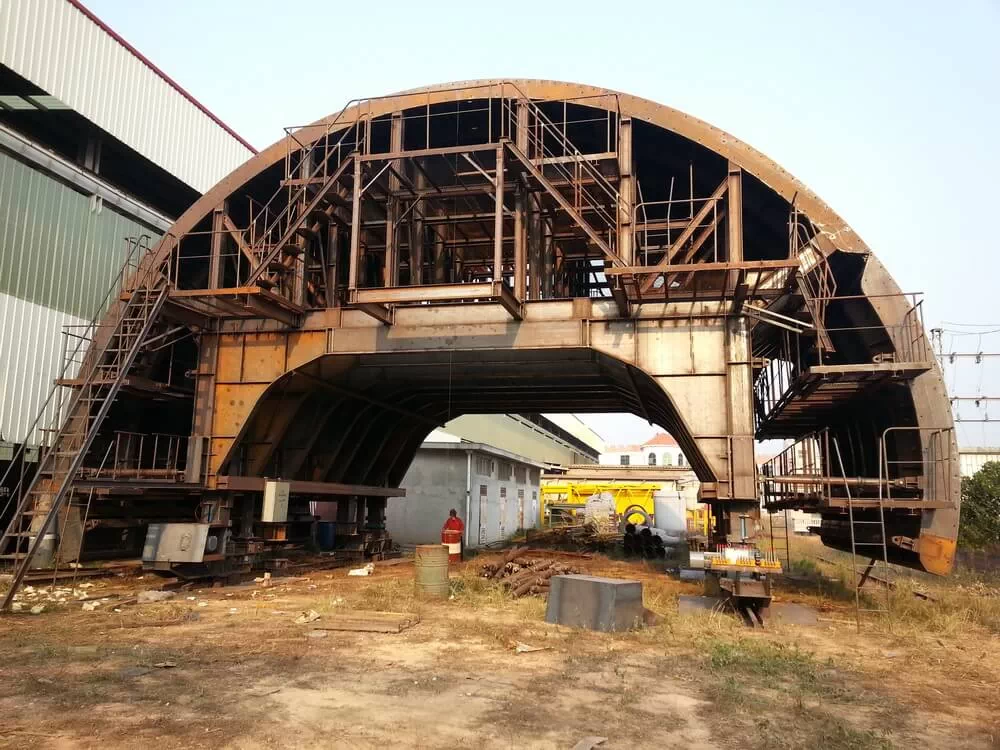
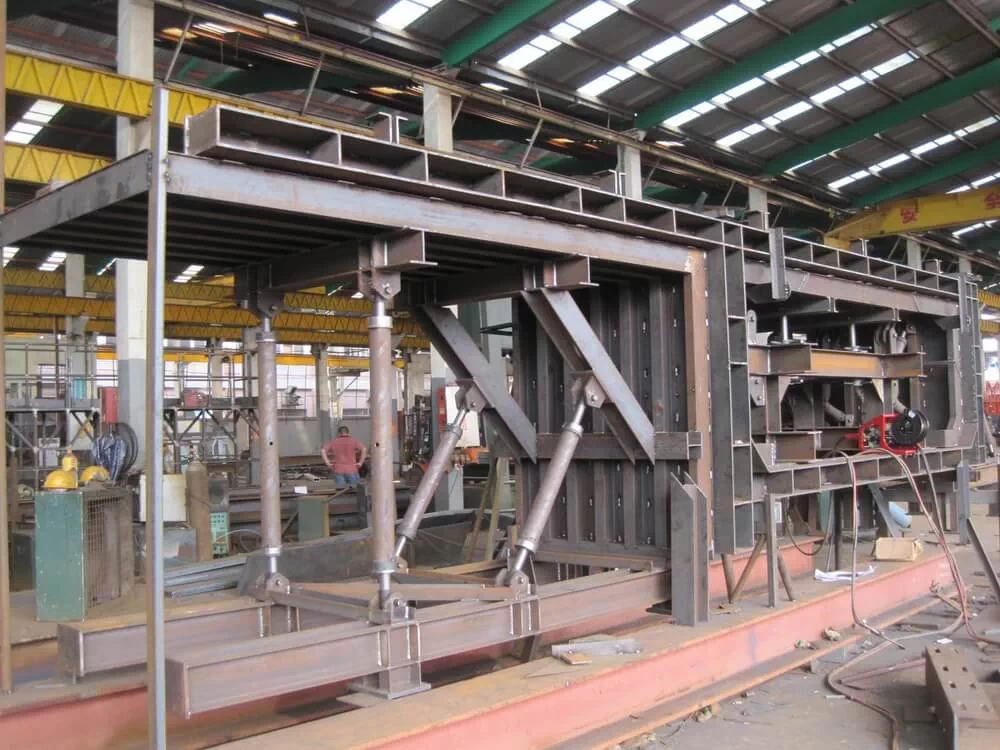
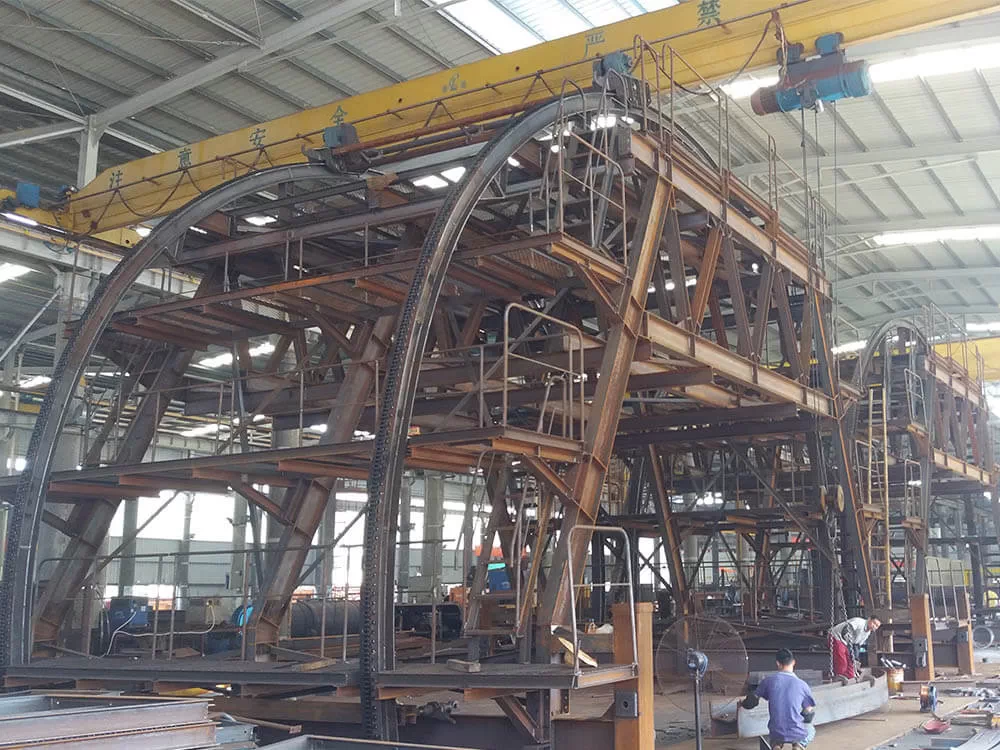
RH Engineering Co., Ltd. is a professional steel structure and steel formwork design and manufacturing company founded in 2016. The company has more than ten years of experience in the design, manufacturing, and installation of steel structures, steel formwork, and construction equipment. Its products are widely used in industrial, commercial, and civil fields, including large-span industrial workshops, warehouses, aircraft hangars, steel office buildings, supermarkets, and road and bridge construction projects.
RH Engineering’s production and painting workshop covers an area of 10,000 square meters in Dongguan City, located just one hour from the seaport. The facility is equipped with high-power laser cutting machines, automated welding robots, standardized fabrication workshops, and a comprehensive quality management system. With a professional team in design, fabrication, and quality control, RH Engineering is positioned to provide detailed design support, material procurement according to international standards, certified fabrication, surface treatment, and project construction management services for clients around the world.
In this article, we will answer the following key questions in detail:
We will also expand the discussion to include design workflow, project communication, drawing coordination, fabrication preparation, and how buyers can work more effectively with a professional steel structure manufacturer. If you want to improve your supplier selection and build a stronger foundation for project success, this guide will help you make a better-informed decision.
Yes, a professional steel structure manufacturer can provide design services, and in many projects this support is one of the most valuable parts of the supplier relationship. Design service does not always mean the manufacturer replaces the project’s architect or structural consultant. Instead, it often means the manufacturer supports the project with detailed design, shop drawing development, connection detailing, fabrication-oriented engineering, and technical coordination that make the structure ready for production and installation.
In real-world construction, there is an important difference between concept design and fabrication design. Concept design may define the building size, layout, functional needs, loading requirements, and overall structural scheme. But before steel members can be manufactured, the project usually needs more detailed information. This is where the technical role of a qualified steel structure manufacturer becomes especially important.
RH Engineering clearly states that it can provide detail shop drawings based on the client’s design. This means the company can transform the project’s engineering intent into practical fabrication documents. These drawings help ensure that columns, beams, bracing, purlins, connections, base plates, and other components are correctly sized, identified, and prepared for manufacturing and site erection.
Design services matter because steel structures rely heavily on precision. Unlike some construction methods that allow more site adjustment, steel structures are largely manufactured off-site and then assembled on-site. If the design stage is not clear and coordinated, problems may appear later in production, shipping, or erection. A reliable steel structure manufacturer helps reduce those risks by supporting the design process with practical and fabrication-based expertise.
Design support is especially useful for projects that involve:
In these projects, the design must balance structural performance, material efficiency, fabrication feasibility, transport conditions, and installation sequence. A skilled steel structure manufacturer understands these practical constraints and can improve the readiness of the project before fabrication starts.
A qualified steel structure manufacturer may provide the following design-related services:
This is one of the most common and most important services. Shop drawings convert engineering design into fabrication instructions. They show dimensions, part marks, material specifications, hole positions, connection details, weld requirements, and assembly relationships.
Manufacturers often review drawings from the perspective of production efficiency. They can suggest adjustments that improve cutting, welding, assembly, and transport while still meeting structural requirements.
Bolted and welded connections are critical in steel structures. A professional steel structure manufacturer can assist in developing clear connection details that help reduce ambiguity during fabrication and installation.
Good design service ensures that what is drawn can actually be manufactured efficiently in the factory. This alignment is important for reducing errors and avoiding unnecessary rework.
At the design stage, clients often have questions about dimensions, loads, functions, appearance, and budget. A manufacturer with design experience can communicate more effectively and help move the project forward faster.
When a steel structure manufacturer provides design services, the client usually benefits in several ways:
In short, design services help connect engineering intent with factory execution. This is one of the main reasons why experienced buyers prefer a steel structure manufacturer that can support the project before production begins, not only after receiving an order.
Yes, many professional steel structure manufacturers offer custom design, and this is often essential because steel structure projects are rarely identical. Every project has its own dimensions, layout, loading conditions, climate environment, local regulations, functional needs, and site constraints. As a result, custom design is one of the key capabilities that distinguishes a high-level steel structure manufacturer from a basic fabrication workshop.
Custom design means the steel structure solution is adapted to the client’s actual project requirements rather than produced from a generic template. Even when a manufacturer has experience with similar buildings, the final structural arrangement usually needs adjustment according to span, height, crane load, roof system, wall system, door openings, ventilation needs, corrosion environment, and project budget.
Custom design matters because no two construction projects are exactly the same. A warehouse may require high storage clearance and large loading doors. An aircraft hangar may require long clear spans and specialized opening systems. A supermarket may prioritize open interior space and architectural coordination. A bridge-related structure may require stronger corrosion resistance and tighter dimensional control. A professional steel structure manufacturer must be able to respond to these differences.
RH Engineering has experience in industrial, commercial, and civil projects, including large-span industrial workshops, warehouses, aircraft hangars, steel office buildings, supermarkets, and road and bridge construction. This range of applications shows why custom design capability is important. Different project types require different structural solutions, detailing strategies, and fabrication planning.
A steel structure manufacturer may offer custom design in the following areas:
Because of these variables, custom design often leads to better structural efficiency and better project performance than a one-size-fits-all approach.
Many buyers assume custom design always means higher cost. In reality, a well-executed custom solution can actually improve cost efficiency. A knowledgeable steel structure manufacturer can optimize member sizes, reduce unnecessary complexity, improve material utilization, and coordinate fabrication methods more effectively. This can lead to lower total project cost even if the design itself is customized.
For example, if the structural layout is designed more efficiently, the building may use less steel or achieve faster erection. If the connection details are simplified, fabrication and installation may become more economical. If the coating system is selected according to actual environmental exposure, the project may gain better life-cycle value.
RH Engineering provides high-performance steel structures supported by precise manufacturing and comprehensive project management services. Its factory includes high-power laser cutting machines and automated welding robots, which allow accurate production of project-specific components. With a professional team in design, fabrication, and quality control, RH Engineering can support clients who need steel structure solutions aligned with their individual project requirements.
This is important because custom design is not only about drawings. It is also about whether the factory can actually produce the customized components with quality and consistency. A capable steel structure manufacturer must combine engineering understanding with production capability.
Before selecting a steel structure manufacturer, buyers should ask:
These questions help determine whether the supplier truly offers custom design or simply modifies standard drawings in a limited way.
Yes, many modern steel structure manufacturers can work from 3D drawings, and this capability has become increasingly important in contemporary construction projects. As buildings become more complex and coordination between disciplines becomes more demanding, 3D models and three-dimensional drawings help improve clarity, reduce design conflicts, and support more accurate fabrication planning.
For a professional steel structure manufacturer, the ability to work from 3D drawings means the company can interpret digital design information and use it to support detailing, fabrication preparation, production coordination, and assembly planning. In many cases, 3D models provide a better understanding of the structural system than 2D drawings alone, especially when the project includes multiple elevations, complex connections, unusual geometry, or integrated building systems.
3D drawings are useful because they improve visualization. Clients, engineers, fabricators, and site teams can better understand how components relate to one another in space. This is especially valuable in steel structure projects because member orientation, connection positioning, and assembly sequence are critical.
Compared with 2D drawings alone, 3D models can help with:
For international and remote projects, 3D drawings are especially helpful because they create a common visual reference between the client and the steel structure manufacturer, even when teams are working in different countries.
A capable steel structure manufacturer may use 3D drawings in several ways:
3D drawings help the manufacturer understand the structural layout, member relationships, and critical dimensions before detailed shop drawings are created.
When the project starts from a 3D model, the manufacturer can use that information to prepare more accurate fabrication drawings and part lists.
By studying the model, the factory team can identify areas that may require production adjustments, special welding access, transport planning, or trial assembly.
3D visual information can make technical discussions clearer and faster, especially for custom or complex projects.
Even if the site erection team mainly uses 2D shop drawings, the 3D drawing or model can still help explain how assemblies fit together during erection.
In many cases, yes. A professional steel structure manufacturer can work from client-provided 3D drawings, provided the drawings contain sufficient technical information and are prepared in a format that can be clearly interpreted. The manufacturer may still need supporting data such as dimensions, member specifications, load conditions, material grades, connection requirements, and applicable standards. A 3D drawing is highly useful, but it is not always enough by itself to complete fabrication unless it is accompanied by complete technical documentation.
This is why early communication is so important. If a client already has 3D drawings, the manufacturer should review them together with the project specifications to confirm what is available and what still needs to be developed. This collaborative approach allows the steel structure manufacturer to move efficiently from design information to production preparation.
Being able to receive 3D drawings is not enough. The real question is whether the steel structure manufacturer can translate digital information into accurate fabricated components. RH Engineering’s facility, equipped with high-power laser cutting machines, automated welding robots, and a comprehensive quality management system, supports this transition from drawing to production. Precision equipment and disciplined process control are essential when dealing with project-specific steel components.
Additionally, RH Engineering performs comprehensive inspections and trial assembly to confirm that product dimensions meet drawing specifications. This is important because even the best 3D design still needs to be validated through real manufacturing control.
To start a project efficiently, a steel structure manufacturer needs clear and complete project information. The better the information provided at the beginning, the faster the manufacturer can evaluate feasibility, prepare drawings, estimate material quantities, plan production, and provide a more accurate quotation or proposal. Missing information can lead to delays, repeated communication, inaccurate pricing, and later design revisions.
In practical terms, starting a steel structure project is not only about saying what type of building you want. It is about defining the technical, functional, and commercial requirements that will guide design and fabrication.
A professional steel structure manufacturer will usually request the following information at the early stage:
Is the project a warehouse, industrial workshop, aircraft hangar, steel office building, supermarket, logistics center, or bridge-related structure? The intended use affects design loads, layout, detailing, and budget priorities.
The project location affects environmental conditions, wind load, seismic requirements, corrosion exposure, transportation planning, and applicable design standards.
The manufacturer typically needs length, width, height, span, bay spacing, roof slope, and any special clearance requirements. These dimensions are fundamental for design development.
If available, the client should provide information such as wind load, snow load, seismic requirements, crane load, floor load, roof live load, and any special equipment loads. These loads directly affect structural member sizing and connection design.
If the client has concept drawings, structural drawings, 2D CAD files, or 3D models, these should be shared with the steel structure manufacturer as early as possible. They help speed up technical review and reduce misunderstanding.
It is important to clarify whether the project should comply with European, Australian, American, or other standards. RH Engineering can provide materials and fabrication in accordance with EN, AS, and ASTM-related requirements, which is useful for international projects.
The client should indicate whether the project requires painting, hot-dip galvanizing, or other protection systems. Surface treatment affects cost, durability, and production planning.
The steel structure manufacturer needs to know where the products will be delivered and whether there are any special shipping or packing requirements. This is especially important for overseas projects.
Expected design completion time, fabrication lead time, shipment timing, and installation schedule should be discussed early. Good schedule alignment helps the manufacturer plan production resources properly.
The client should clarify whether the manufacturer is expected to provide only fabrication, or also detailed design, procurement, surface treatment, logistics support, and project construction management services.
Providing complete information helps the steel structure manufacturer respond more accurately and professionally. It supports:
For best results, clients should provide as much technical information as possible at the start. If some data is not yet available, an experienced steel structure manufacturer can often guide the client on what information should be prioritized first.
A strong steel structure manufacturer does much more than receive drawings and produce steel components. The best manufacturers support project planning across multiple stages, helping clients move from concept to execution with better control and clearer communication.
This support often includes:
RH Engineering’s services include detailed design, procurement, manufacture, and project construction management. This integrated service model is valuable because it reduces fragmentation between design, sourcing, production, and execution. Instead of dealing with multiple disconnected parties, the client can work with a steel structure manufacturer that understands the full process.
| Service Area | What the Steel Structure Manufacturer Provides | Why It Matters |
|---|---|---|
| Detail Design | Shop drawings based on client design | Turns concept into fabrication-ready documents |
| Custom Design Support | Project-specific structural coordination and optimization | Matches the solution to real project needs |
| 3D Drawing Coordination | Review and use of client-provided 3D drawings or models | Improves visualization and reduces misunderstanding |
| Material Procurement | Steel materials according to EN, AS, and ASTM-related requirements | Supports compliance and quality expectations |
| Production Preparation | Fabrication planning based on drawings and schedule | Helps avoid delays and improves efficiency |
| Inspection and Trial Assembly | Dimensional checks and assembly verification | Reduces risk before shipment and installation |
| Information Type | Examples | Purpose |
|---|---|---|
| Project Type | Warehouse, workshop, hangar, supermarket, office building | Defines structural use and design priorities |
| Location | Country, city, climate zone, site conditions | Affects loads, corrosion exposure, and logistics |
| Dimensions | Length, width, height, span, bay spacing | Forms the basis for structural layout |
| Loads | Wind, snow, seismic, crane, floor and roof loads | Determines member sizing and structural safety |
| Drawings | 2D CAD files, PDF drawings, 3D models | Improves technical review and coordination |
| Standards | EN, AS, ASTM, or project-specific requirements | Guides material selection and fabrication compliance |
| Surface Treatment | Painting or hot-dip galvanizing | Affects durability and finishing plan |
| Delivery Information | Destination port, inland delivery, packing needs | Supports logistics planning |
| Schedule | Required lead time and installation target | Helps align production with project timeline |
| Scope of Service | Design, fabrication, logistics, project management | Clarifies commercial expectations and responsibilities |
RH Engineering combines design support, manufacturing strength, and project execution experience in a way that many global clients need from a professional steel structure manufacturer. The company was founded in 2016 and has more than ten years of experience in the design, manufacturing, and installation of steel structures, steel formwork, and construction equipment.
Its capabilities are supported by a 10,000-square-meter production and painting workshop in Dongguan City, strategically located near the seaport for efficient export and delivery. With advanced laser cutting machines and automated welding robots, RH Engineering can produce accurate steel components with consistent quality. At the same time, its professional team in design, fabrication, and quality control helps ensure that projects are supported from the early drawing stage to the final delivery stage.
RH Engineering also offers:
For buyers who need not just a supplier but a true project partner, these strengths are highly relevant. A dependable steel structure manufacturer should provide technical confidence, manufacturing precision, and responsive service throughout the project lifecycle, and RH Engineering is positioned to do exactly that.
Yes. A professional steel structure manufacturer can provide design-related services such as detail shop drawings, fabrication-oriented engineering, connection detailing, and technical coordination based on the client’s project requirements.
Yes. Many experienced manufacturers offer custom design solutions tailored to the project’s dimensions, functions, loads, layout, and environmental conditions.
Yes. Many modern steel structure manufacturers can review and work from 3D drawings or models, especially when the files are supported by complete technical specifications and dimensions.
Usually the manufacturer needs the project type, location, dimensions, load requirements, drawings, applicable standards, surface treatment requirements, delivery destination, expected schedule, and scope of service.
Custom design is important because different buildings have different functional, structural, and environmental requirements. A project-specific solution usually performs better than a generic one.
Not always. 3D drawings are very helpful, but fabrication usually also requires complete dimensions, material specifications, connection details, and applicable technical standards.
A reliable manufacturer should combine design support, quality-controlled fabrication, clear communication, standards compliance, logistics coordination, and after-delivery technical responsiveness.
Choosing the right steel structure manufacturer is about much more than finding a factory to process steel. It is about selecting a partner that can support the project from the earliest planning stage through fabrication, delivery, and execution. As we have seen, a professional steel structure manufacturer can provide design services, offer custom design support, work from 3D drawings, and guide clients on what information is needed to start a project properly.
These capabilities are not small details. They directly affect drawing accuracy, production quality, construction efficiency, budget performance, and the overall success of the project. The more clearly the manufacturer can connect engineering requirements with practical fabrication and project planning, the more value the client receives.
For industrial, commercial, and civil steel structure projects, working with an experienced steel structure manufacturer can reduce risk, strengthen coordination, and improve outcomes from concept to completion. That is why design support and technical communication should be key criteria when evaluating suppliers in today’s global construction market.
If you are looking for a reliable steel structure manufacturer that can support your project with design services, custom solutions, 3D drawing coordination, precise fabrication, and efficient project management, RH Engineering is ready to help. With more than ten years of experience, a 10,000-square-meter modern factory, advanced laser cutting and automated welding equipment, strict quality inspection processes, and strong overseas project experience, we provide high-performance steel structure solutions for clients worldwide.
Whether you are planning a warehouse, industrial workshop, aircraft hangar, steel office building, supermarket, or bridge-related structure, our team can help you move from concept to delivery with confidence. Send us your drawings, project requirements, or technical inquiry today, and let RH Engineering provide the professional support you need from an experienced steel structure manufacturer.
What We Provide!
We are the best manufacturer of the products and can provide professional solutions for you. Please feel free to contact us for a quick quote now!
You can get a price of this model or send us any question to get any information you would like to know, we will reply to you soonest.