Steel Structure Manufacturer Guide: Shop Drawings, Trial Assembly, Shipment Preparation, and Packing
A steel structure manufacturer plays a critical role in the success of industrial, commercial, and civil construction projects. Whether the project is a warehouse, large-span workshop, aircraft hangar, steel office building, supermarket, or road and bridge structure, the quality of manufacturing and pre-shipment preparation has a direct impact on installation efficiency, dimensional accuracy, structural safety, project schedule, and total cost.
For project owners, EPC contractors, builders, and procurement managers, it is not enough to compare price alone when choosing a steel structure manufacturer. It is equally important to understand whether the manufacturer can provide shop drawings, how quality is controlled before shipment, why trial assembly is performed, and how steel components are packed and shipped for international delivery. These topics affect not only production quality, but also on-site erection speed, risk reduction, and long-term project performance.
RH Engineering Co., Ltd. is a professional steel structure, steel formwork, and construction equipment company founded in 2016, supported by more than ten years of experience in design, manufacturing, and installation. The company serves industrial, commercial, and civil fields, with projects including large-span industrial workshops, warehouses, aircraft hangars, steel office buildings, supermarkets, and road and bridge construction. Located in Dongguan City near the seaport, RH Engineering operates a 10,000-square-meter production and painting workshop equipped with high-power laser cutting machines, automated welding robots, and a comprehensive quality management system. These capabilities allow RH to provide detailed design, procurement, manufacture, and project construction management for clients worldwide.
In this article, we will answer four important questions in detail:
- Do steel structure manufacturers provide shop drawings?
- What happens before steel structure shipment?
- Why is trial assembly important for steel structures?
- How are steel components packed and shipped?
We will also expand these topics to create a complete, practical, and SEO-friendly guide for buyers looking for a reliable steel structure manufacturer.
Do steel structure manufacturers provide shop drawings?
Yes, a professional steel structure manufacturer should provide shop drawings, especially for customized projects and export steel structures. Shop drawings are one of the most important documents in the entire steel structure production process because they convert design intent into practical manufacturing and installation information.
In many projects, the client or engineering consultant provides general design drawings, conceptual layouts, structural calculations, or tender documents. However, these documents are often not detailed enough for factory production. Shop drawings bridge this gap. They show the exact dimensions, connection details, hole positions, weld symbols, member marks, assembly relationships, plate sizes, bolt arrangements, and other fabrication instructions needed by the workshop.
RH Engineering provides detailed shop drawings according to the client’s design. This is an important capability because accurate detailing reduces errors, improves production efficiency, and ensures that fabricated components fit correctly during installation.
What are shop drawings in steel structure projects?
Shop drawings are production-level drawings prepared for fabrication and assembly. Unlike general design drawings, shop drawings are created specifically to guide the workshop and erection team. They explain how each beam, column, rafter, brace, plate, and connection should be manufactured and assembled.
A complete shop drawing package from a qualified steel structure manufacturer may include:
- General arrangement drawings
- Single part drawings
- Assembly drawings
- Connection detail drawings
- Bolt and hole schedules
- Material lists
- Weld details
- Surface treatment notes
- Marking and identification instructions
These documents help ensure that all departments—engineering, procurement, fabrication, inspection, packing, and site installation—work from the same technical information.
Why shop drawings matter
Shop drawings matter because even a small error in steel fabrication can create major problems on site. If hole positions are incorrect, if plate sizes do not match, or if member lengths are wrong, installation may be delayed and costly rework may be required. For overseas projects, mistakes are even more serious because replacing parts can take a long time and increase shipping costs significantly.
A reliable steel structure manufacturer uses shop drawings to improve:
- Dimensional accuracy
- Fabrication efficiency
- Material planning
- Coordination between members
- Installation sequence planning
- Inspection quality
- Delivery marking and traceability
In short, shop drawings are a core part of risk control.
Who prepares the shop drawings?
In many cases, the steel structure manufacturer prepares the shop drawings based on the customer’s design drawings and project specifications. The drawings are then submitted for approval before production begins. This process helps clarify technical issues early and avoid misunderstandings later.
Because RH Engineering has experience in steel structure design and manufacturing, it can support clients with detailed design coordination. For international projects, this is highly valuable because buyers often need a supplier that can do more than simply cut and weld steel. They need a manufacturing partner that understands project execution.
How shop drawings support quality and schedule
A manufacturer that provides professional shop drawings is usually better positioned to control quality and schedule. Accurate drawings make material procurement more precise, reduce workshop confusion, and help inspectors verify finished components against the approved requirements.
This is especially important for projects involving:
- Large-span industrial workshops
- Warehouses
- Aircraft hangars
- Steel office buildings
- Supermarkets
- Bridge and road construction structures
When buyers evaluate a steel structure manufacturer, the ability to provide shop drawings should be considered a major advantage rather than an optional service.
What happens before steel structure shipment?
Before shipment, a professional steel structure manufacturer completes a series of important steps to make sure the steel components meet drawing requirements, quality standards, and transportation conditions. Shipment is not simply the act of loading steel onto a truck or into a container. It is the final stage of factory control before the project enters the logistics and installation phase.
At RH Engineering, all components must pass strict inspection before delivery. This reflects a key principle in steel structure manufacturing: problems must be discovered and corrected in the factory, not at the job site.
Pre-shipment work usually includes several stages
Before steel structure shipment, the manufacturer typically performs:
- Final dimensional inspection
- Weld quality inspection
- Surface treatment checking
- Member marking and identification
- Trial assembly if required
- Quantity verification
- Packing preparation
- Shipping plan coordination
- Loading and transport arrangement
- Document preparation
Each of these steps is important. If one is ignored, the project may face delays, damage, confusion during unloading, or installation errors.
Final dimensional inspection
The first key step before shipment is final dimensional inspection. The steel structure manufacturer checks whether the finished members match the approved shop drawings and technical requirements. This may include checking:
- Overall length and width
- Section size
- Plate thickness
- Hole location and diameter
- Connection spacing
- Straightness
- Squareness
- Assembly dimensions
RH Engineering’s inspection workshop performs comprehensive inspections to ensure each product meets standards and drawing specifications. This type of controlled inspection is critical for both domestic and overseas projects.
Weld inspection
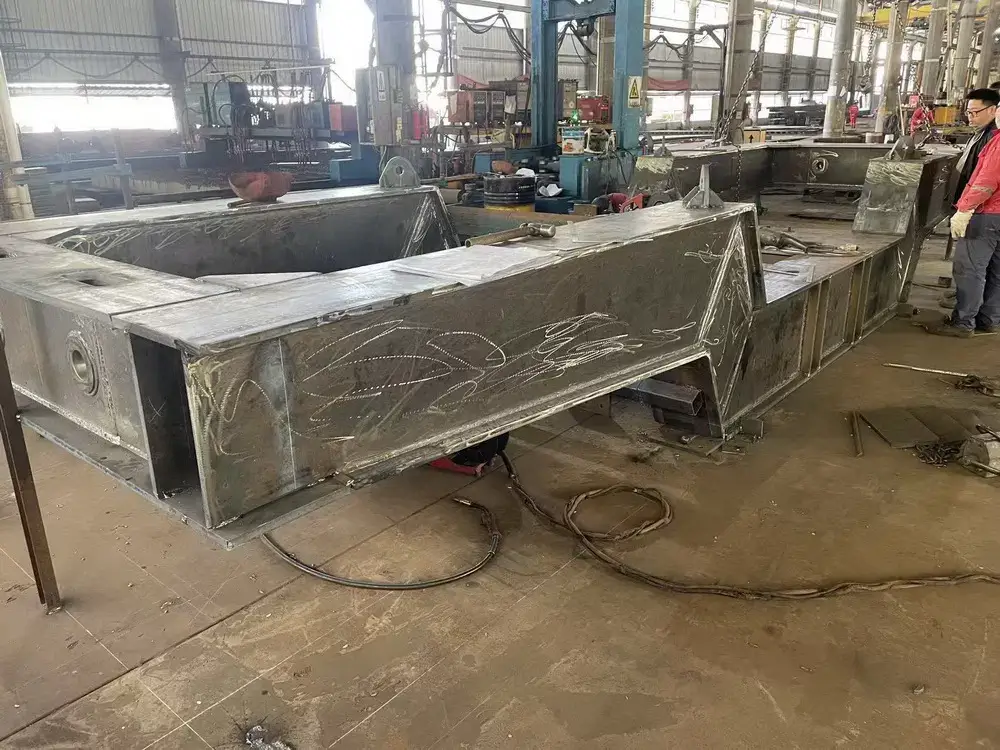
Welding is one of the most important operations in steel structure manufacturing. Poor weld quality can reduce structural performance and create safety risks. Before shipment, the steel structure manufacturer should inspect weld appearance, size, continuity, and compliance with the specified standards.
Because RH Engineering uses automated welding robots along with quality control procedures, it is able to improve welding consistency and overall structural integrity. This is especially valuable for export projects where clients require reliable fabrication quality.
Surface treatment checking
If the project requires painting or hot-dip galvanizing, the coating condition must be checked before shipment. Surface treatment is important for corrosion protection, service life, and appearance.
RH Engineering provides both painting and hot-dip galvanizing. Before shipment, the manufacturer should verify:
- Coating completeness
- Surface cleanliness
- Paint coverage
- Damage or scratches
- Compliance with project requirements
A good steel structure manufacturer ensures that the coating system supports long-term durability, especially for structures exposed to industrial, humid, or outdoor environments.
Member marking and identification
Before shipment, each component must be marked clearly so that the site team can identify it quickly during unloading and installation. Clear marking reduces confusion and improves erection efficiency.
Member marking may include:
- Part number
- Assembly number
- Project code
- Orientation mark
- Installation reference
This is especially important for complex structures with many similar-looking components.
Packing and loading plan
Another important pre-shipment step is the preparation of the packing and loading plan. A professional steel structure manufacturer does not pack randomly. Instead, it organizes the components according to size, weight, sequence, container dimensions, transport safety, and site unloading efficiency.
For export projects, this stage is even more important because steel components may travel long distances by truck and sea freight.
Shipment documents
Before shipment, the manufacturer may also prepare documents such as:
- Packing list
- Delivery note
- Inspection records
- Material certificates
- Coating records
- Commercial invoice
- Shipping marks list
These documents help support customs clearance, logistics coordination, and project receiving control.
Why is trial assembly important for steel structures?
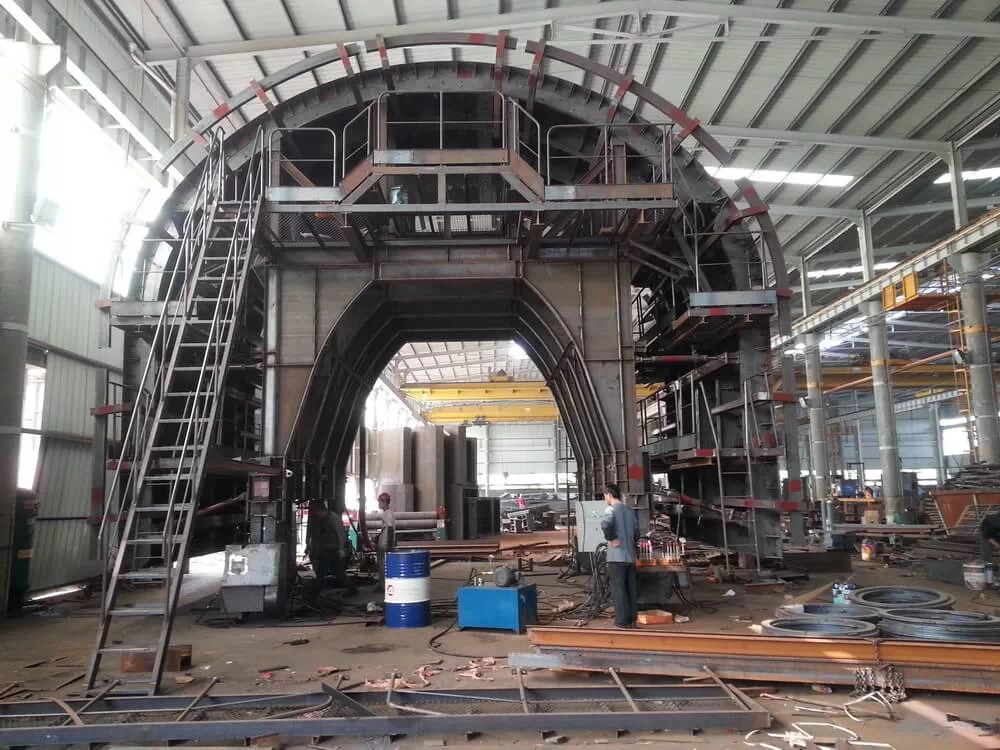
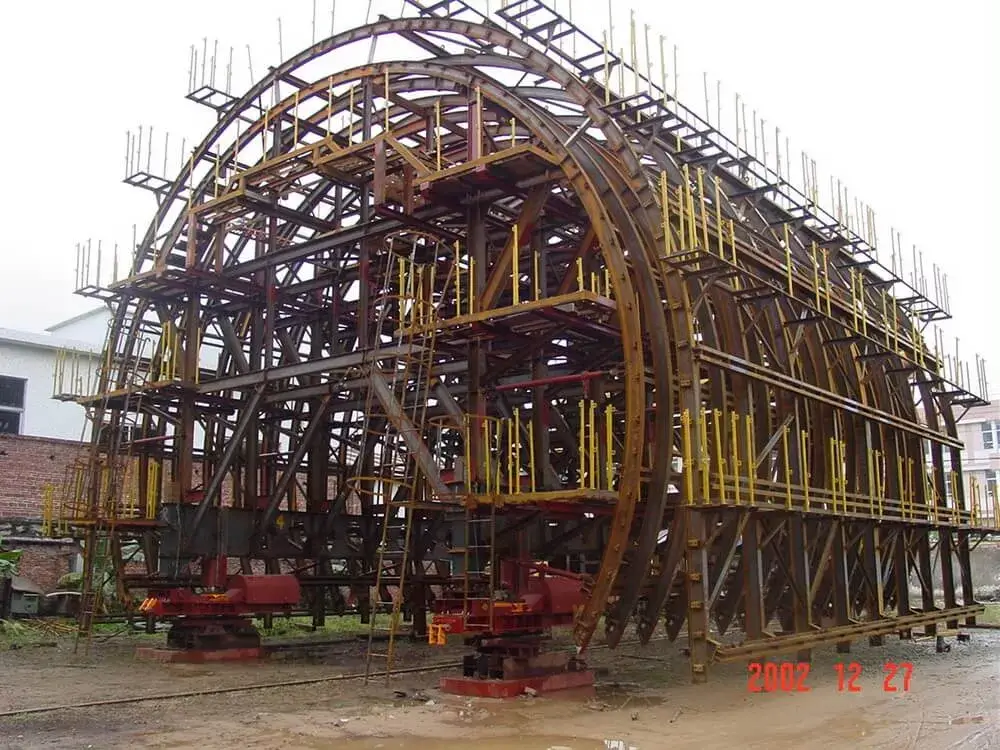
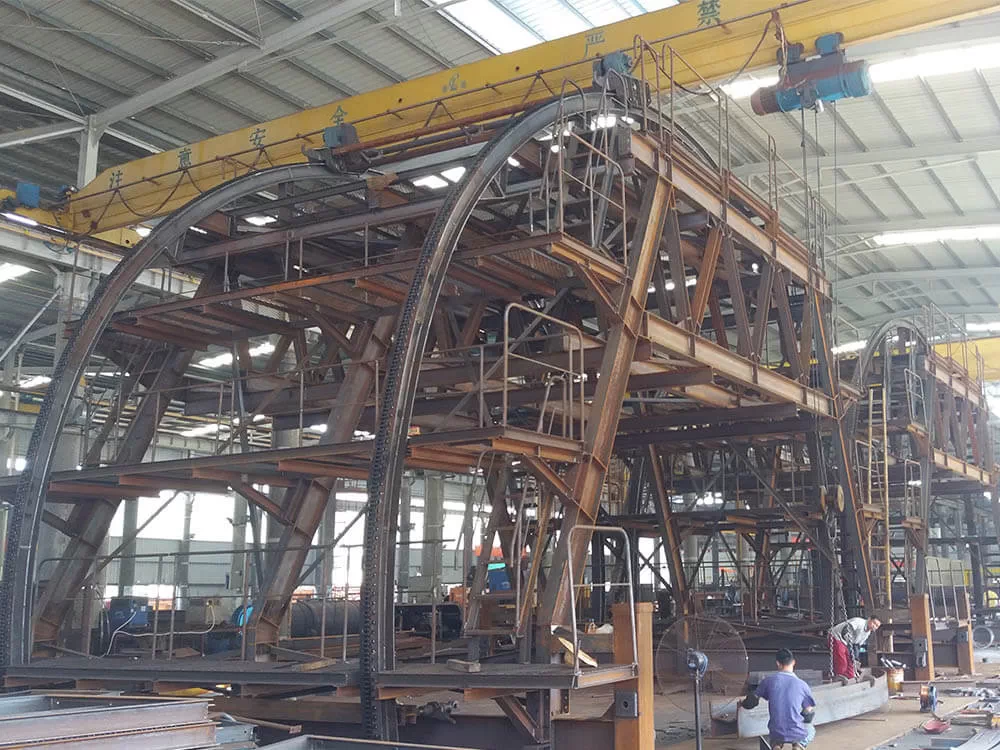
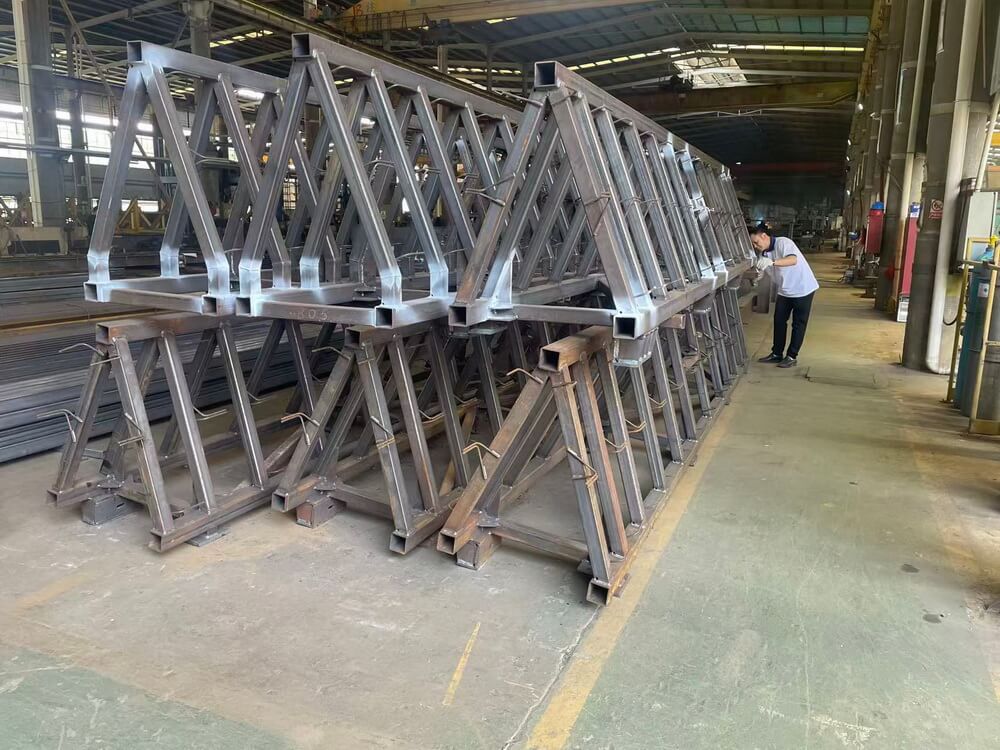
Trial assembly is important because it allows the steel structure manufacturer to verify whether fabricated components fit together correctly before shipment. This process reduces installation risk, confirms dimensional accuracy, and helps identify problems while corrections are still easy and cost-effective.
RH Engineering’s assembly workshop performs trial assembly to confirm that the product’s overall dimensions meet drawing specifications. This is a strong sign of a quality-focused manufacturer.
What is trial assembly?
Trial assembly means that selected steel components, or sometimes complete structural units, are temporarily assembled in the factory before shipment. The purpose is to confirm that the fabricated parts match one another correctly and can be installed according to the design requirements.
Trial assembly may involve checking:
- Bolt hole alignment
- Plate matching
- Overall geometry
- Connection fit
- Spacing between members
- Structural alignment
- Installation feasibility
This process is especially useful for complex or large-span steel structures.
Why trial assembly matters for project success
A steel structure manufacturer that performs trial assembly can reduce the chance of site problems significantly. If parts do not fit correctly at the job site, the consequences may include:
- Installation delays
- Crane standby costs
- Labor inefficiency
- Field rework
- Safety risks
- Project schedule overruns
By checking fit in advance, the manufacturer helps the client avoid these issues.
Trial assembly improves dimensional control
Even when each part appears correct individually, problems can still occur when multiple members are connected together. Trial assembly helps detect these accumulated dimensional deviations.
For example, it can reveal:
- Slightly misplaced holes
- Inconsistent plate angles
- Beam-to-column mismatch
- Assembly tolerance problems
- Interference between connection parts
This is one reason why trial assembly is so valuable in steel structure manufacturing.
Which projects benefit most from trial assembly?
Trial assembly is particularly important for:
- Large-span industrial workshops
- Aircraft hangars
- Warehouses with complex connections
- Steel office buildings
- Bridge-related structures
- Projects with special geometry
- Export projects where site corrections are difficult
Because RH Engineering serves industrial, commercial, and civil projects across different applications, trial assembly is an effective method for ensuring installation readiness before delivery.
Trial assembly reflects manufacturer professionalism
Not every factory performs trial assembly. Some suppliers skip it to save time. However, a professional steel structure manufacturer understands that factory verification often saves much more time and money later.
When a supplier includes trial assembly as part of its process, it usually indicates:
- Better quality awareness
- Better dimensional control
- Better engineering coordination
- Better concern for customer installation success
For buyers comparing suppliers, this is an important differentiator.
How are steel components packed and shipped?
Steel components are packed and shipped according to their size, weight, shape, coating condition, transport method, and site installation requirements. A professional steel structure manufacturer must ensure that packing protects the components, preserves markings, prevents damage, and supports efficient loading, unloading, and erection.
Packing and shipping are not only logistics tasks. They are also part of quality control and project management.
Packing principles for steel structures
The main goals of packing are to:
- Protect steel components from damage
- Prevent deformation during transport
- Preserve painted or galvanized surfaces
- Keep small accessories organized
- Make unloading easier
- Support installation sequencing
- Improve transport efficiency
A responsible steel structure manufacturer plans packing carefully, especially for international shipments.
How different components are usually packed
Large structural members
Large beams, columns, rafters, and trusses are usually bundled or loaded individually depending on their dimensions and weight. Spacers may be used to prevent surface damage and allow lifting access.
Small steel parts
Connection plates, brackets, stiffeners, and similar small parts are often grouped into bundles, pallets, or steel cages. Clear labels are important so these parts can be identified easily at the site.
Bolts and accessories
Bolts, nuts, washers, and other accessories are usually packed in boxes or bags with clear identification. These items should be organized by connection type or installation zone whenever possible.
Painted components
Painted members require protection to reduce scratches, rubbing, and coating damage during handling and shipment.
Shipment methods for steel structures
Depending on project location and component size, steel structures may be shipped by:
- Truck
- Flatbed trailer
- Container
- Breakbulk vessel
- Combined inland and sea transport
Because RH Engineering is located only about one hour from the seaport, it has a logistics advantage for export shipments. Its partnership with trusted shipping companies also helps provide reliable and cost-effective delivery solutions.
What a good shipping plan should consider
A professional steel structure manufacturer should consider the following when preparing shipment:
- Component dimensions and weight
- Container or vehicle limitations
- Protection of coating surfaces
- Site unloading conditions
- Installation sequence
- Customs and export requirements
- Delivery schedule coordination
This planning helps reduce transport risk and improves site efficiency.
Table: Key stages before shipment from a steel structure manufacturer
| Stage | Main Activities | Why It Matters |
|---|---|---|
| Shop drawing confirmation | Review fabrication details and approved drawings | Prevents production and installation errors |
| Final inspection | Check dimensions, holes, welds, and part accuracy | Ensures compliance before delivery |
| Surface treatment check | Inspect painting or galvanizing condition | Protects durability and appearance |
| Trial assembly | Verify fit and overall geometry | Reduces site installation problems |
| Member marking | Label each component clearly | Improves unloading and erection efficiency |
| Packing | Bundle, palletize, and protect components | Prevents transport damage |
| Shipping coordination | Arrange loading, transport, and documents | Supports timely and reliable delivery |
Table: Why buyers should choose a professional steel structure manufacturer
| Evaluation Point | What to Look For | RH Engineering Advantage |
|---|---|---|
| Shop drawings | Ability to provide detailed fabrication drawings | Provides detail shop drawings per client design |
| Manufacturing capacity | Organized factory and modern equipment | 10,000-square-meter workshop |
| Cutting quality | High-precision cutting equipment | High-power laser cutting machines |
| Welding quality | Controlled and consistent welding | Automated welding robots |
| Quality control | Strict inspection before delivery | Comprehensive quality management system |
| Trial assembly | Verification of fit before shipment | Assembly workshop confirms overall dimensions |
| Surface treatment | Painting and galvanizing capability | Offers both painting and hot-dip galvanizing |
| Logistics | Efficient export transport support | Near seaport with global logistics support |
How a steel structure manufacturer supports international projects
For overseas buyers, choosing a steel structure manufacturer with export experience is particularly important. International projects involve more coordination than local deliveries. The manufacturer must understand not only fabrication, but also standards, packaging, logistics, and communication requirements.
RH Engineering has strong advantages for export-oriented service:
- Experience in industrial, commercial, and civil sectors
- Capability to work with EN, AS, and ASTM-related requirements
- Detailed design support
- Material procurement support
- Manufacturing and project management capability
- Strict inspection before delivery
- Strategic location near the seaport
For global clients, this combination improves both confidence and efficiency.
What makes RH Engineering a reliable steel structure manufacturer?
Based on the company information provided, RH Engineering demonstrates the core features buyers expect from a dependable steel structure manufacturer:
- Founded in 2016 with more than ten years of industry experience
- Professional in steel structure, steel formwork, and construction equipment
- Serves industrial, commercial, and civil applications
- Projects include warehouses, hangars, workshops, office buildings, supermarkets, and bridge construction
- Modern 10,000-square-meter production and painting workshop
- High-power laser cutting machines for precise fabrication
- Automated welding robots for consistent weld quality
- Comprehensive quality management system
- Strict inspection before delivery
- Trial assembly to verify overall dimensions
- Ability to provide detailed shop drawings
- Painting and hot-dip galvanizing services
- Near-seaport location for efficient delivery
These strengths make RH Engineering well positioned to serve customers looking for high-quality steel structure solutions with reliable factory execution.
FAQ: Steel structure manufacturer, shipment, and trial assembly
Do steel structure manufacturers provide shop drawings?
Yes. A professional steel structure manufacturer usually provides shop drawings based on the client’s design and project requirements. These drawings guide fabrication, inspection, and installation.
What happens before steel structure shipment?
Before shipment, the manufacturer usually completes final inspection, weld checking, surface treatment verification, member marking, trial assembly if required, packing, and shipping coordination.
Why is trial assembly important for steel structures?
Trial assembly helps verify fit, alignment, and overall dimensions before shipment. It reduces installation risk, site delays, and expensive field corrections.
How are steel components packed and shipped?
Steel components are packed according to size, weight, coating condition, and transport method. Large members may be bundled, small parts may be palletized, and bolts are usually boxed and labeled. Shipping may be by truck, container, or sea freight.
Why are clear markings important before shipment?
Clear markings help site teams identify each component quickly, reduce unloading confusion, and improve erection efficiency.
What should buyers check when choosing a steel structure manufacturer?
Buyers should review the manufacturer’s shop drawing capability, equipment, quality control system, inspection process, trial assembly practice, surface treatment options, and logistics support.
Does RH Engineering support overseas projects?
Yes. RH Engineering has export-oriented strengths including detailed design support, modern fabrication facilities, strict quality control, and a location near the seaport for efficient global delivery.
Conclusion
Choosing the right steel structure manufacturer is about much more than price. Buyers should understand whether the supplier can provide shop drawings, control quality before shipment, perform trial assembly, and organize packing and shipping correctly. These factors directly affect structural accuracy, installation efficiency, project timing, and total cost.
A professional steel structure manufacturer adds value by combining engineering support, precise fabrication, strict inspection, effective trial assembly, and reliable logistics. RH Engineering demonstrates these capabilities through its experienced team, 10,000-square-meter workshop, advanced laser cutting and robotic welding equipment, comprehensive quality management system, and efficient export support near the seaport.
For industrial, commercial, and civil projects, working with a manufacturer that controls every stage—from detailing to shipment—can significantly reduce project risk and improve final results.
Contact a Professional Steel Structure Manufacturer for Your Next Project
If you are looking for a reliable steel structure manufacturer for warehouses, industrial workshops, aircraft hangars, steel office buildings, supermarkets, or road and bridge projects, RH Engineering is ready to support you. We provide detailed shop drawings, material procurement, precision fabrication, strict inspection, trial assembly, surface treatment, and efficient global delivery tailored to your project requirements.
Send us your drawings, specifications, or inquiry today to get a fast and professional quotation. Working with an experienced steel structure manufacturer can help you improve project quality, reduce installation risk, and achieve better construction efficiency from factory production to on-site assembly.