Steel Structure Manufacturer Guide: Why Choose Steel Structures Over Concrete?
Steel structure manufacturer selection is one of the most important decisions for any industrial, commercial, or civil construction project. When investors, contractors, developers, and procurement teams compare structural systems, one of the most common questions is whether steel structures are better than concrete or other traditional building methods. The answer depends on project goals, budget, schedule, structural span, durability requirements, and long-term operating efficiency. In many modern construction applications, steel structures offer significant advantages in speed, flexibility, precision, and total project performance.
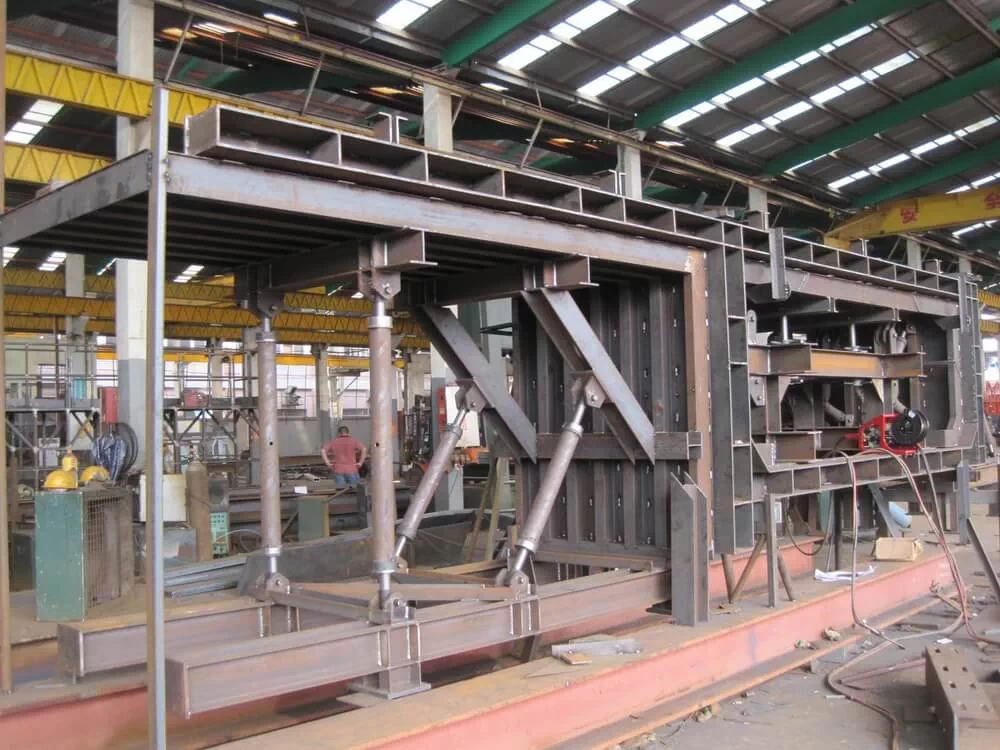
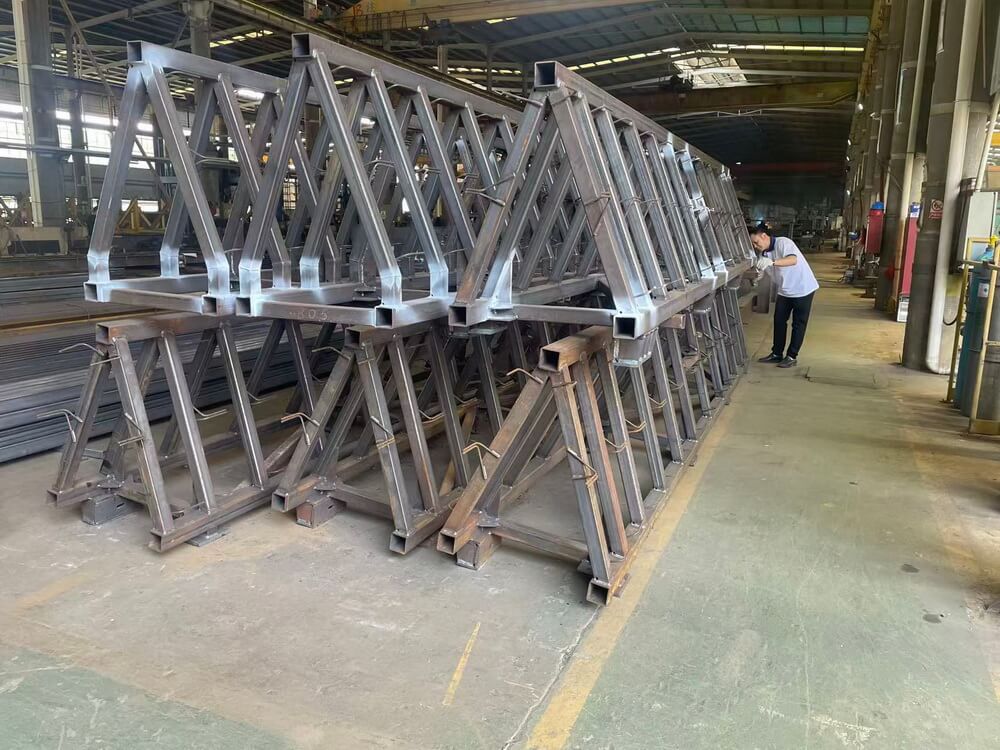
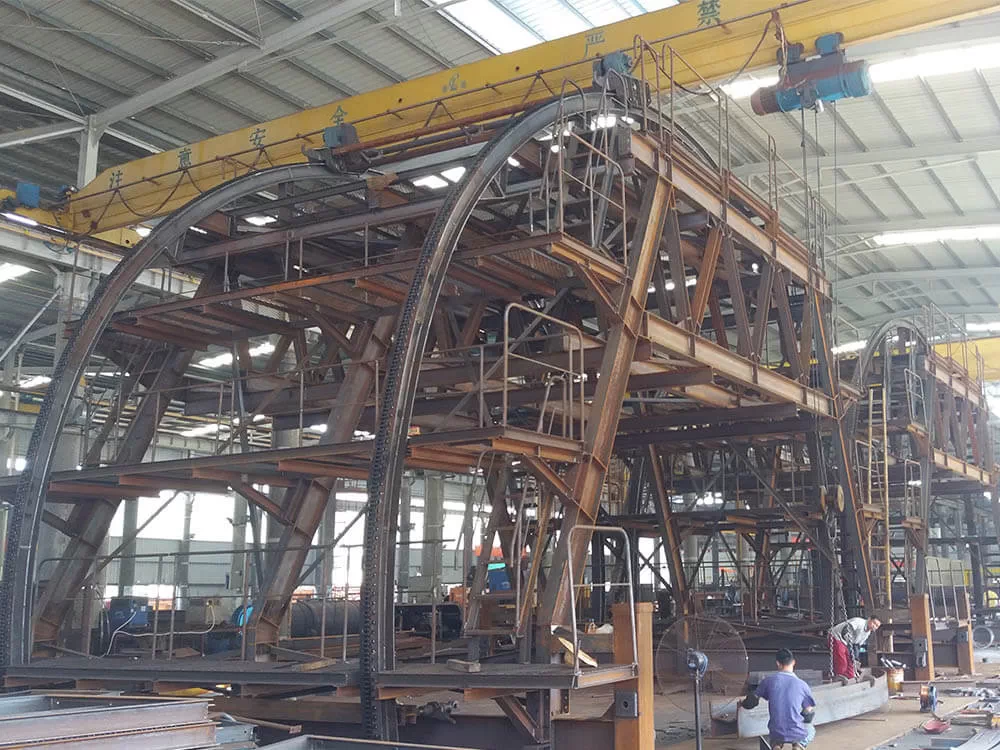
As a professional steel structure manufacturer, RH Engineering Co., Ltd. has extensive experience in the design, manufacturing, and installation of steel structures, steel formwork, and construction equipment. Founded in 2016 and backed by more than ten years of industry experience, RH serves industrial, commercial, and civil sectors, including large-span industrial workshops, warehouses, aircraft hangars, steel office buildings, supermarkets, and road and bridge construction projects. With a 10,000-square-meter production and painting workshop, advanced laser cutting machines, automated welding robots, strict quality inspection processes, and global logistics support, RH provides integrated solutions for clients worldwide.
This article is designed as a high-quality SEO content page focused on the core keyword Steel structure manufacturer. It answers the following important questions in detail:
- Why choose steel structures over concrete?
- What are the advantages of steel structures?
- Are steel structures better than traditional buildings?
In addition to answering these questions directly, this guide also expands on design flexibility, structural efficiency, project timelines, quality control, factory precision, international standards, logistics, and long-term value. If you are looking for a reliable steel structure manufacturer for your next project, this article will help you understand why steel is increasingly preferred across global construction markets.
Why choose steel structures over concrete?
Many developers and contractors ask why they should choose steel instead of concrete. In practical construction terms, steel structures are often chosen over concrete because they are faster to fabricate, quicker to install, lighter in weight, easier to expand, more suitable for long-span buildings, and more adaptable to prefabrication and international shipment. For warehouses, workshops, industrial plants, aircraft hangars, supermarkets, and commercial buildings, a professional steel structure manufacturer can deliver structural systems that reduce construction time while improving accuracy and installation efficiency.
Steel structures are faster to build than concrete structures
One of the biggest reasons to choose steel over concrete is speed. Concrete construction often requires extensive formwork, on-site reinforcement work, curing time, and more weather-dependent procedures. Steel structures, by contrast, are largely prefabricated in the factory and then delivered to the site for assembly. This shortens the on-site schedule significantly.
A capable steel structure manufacturer prepares detailed shop drawings, performs precision cutting, robotic welding, dimensional inspection, and even trial assembly before shipment. This allows the project team to move from manufacturing to installation much more efficiently than a conventional concrete structure that depends heavily on site-based casting activities.
For owners, time savings can translate directly into commercial value. A faster project completion means earlier factory operation, earlier warehouse usage, earlier rental income, or earlier business opening.
Steel structures are lighter than concrete structures
Steel has a high strength-to-weight ratio. This means a steel structure can achieve the required structural performance with less self-weight than a comparable concrete system. A lighter structure can reduce foundation loads, which may lower foundation size, excavation requirements, and related construction costs.
This is especially important in sites with weaker soil conditions, projects requiring large spans, or buildings where reducing dead load can improve economic efficiency. A professional steel structure manufacturer can optimize member sizes to balance strength, cost, and constructability.
Steel structures are better for long-span buildings
Large-span buildings are one of the strongest applications for steel. Warehouses, industrial workshops, aircraft hangars, logistics centers, sports halls, and supermarkets often need large open interior spaces with fewer columns. Steel performs very well in these scenarios because it can span long distances efficiently while maintaining structural reliability.
Concrete can also be used for certain spans, but in many industrial and commercial projects, steel offers better flexibility and lower structural congestion. This is one reason why a specialized steel structure manufacturer is often the preferred partner for large-span construction.
Steel structures offer better prefabrication and quality control
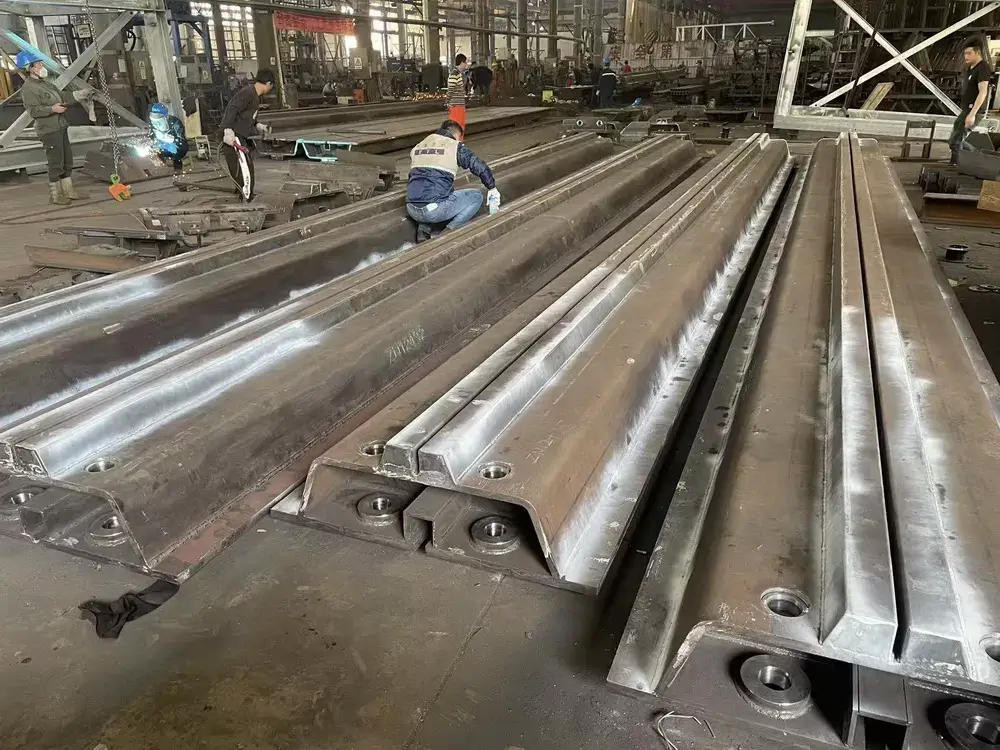
Concrete quality can vary depending on site conditions, weather, labor skill, curing control, and material handling. Steel fabrication, on the other hand, can be controlled more precisely in a factory environment. At RH Engineering, materials are stacked and labeled by type and specification, laser cutting ensures precise dimensions and clean edges, robotic welding improves consistency and structural integrity, and comprehensive inspections help ensure that each product meets drawings and standards before delivery.
This factory-controlled process is a major advantage when choosing a steel structure manufacturer. It improves repeatability, dimensional accuracy, and overall project confidence.
Steel structures are easier to modify, expand, or relocate
Business needs change over time. Factories expand. Warehouses need extensions. Industrial production lines change layout. One important reason to choose steel over concrete is flexibility. Steel buildings are often easier to extend, strengthen, modify, or partially dismantle than concrete buildings.
For investors thinking beyond the initial project phase, this adaptability has real long-term value. A professional steel structure manufacturer can also design with future expansion in mind, helping clients build not only for today’s needs but also for tomorrow’s growth.
Steel structures can improve international project delivery
For export or overseas projects, steel structures are particularly suitable because prefabricated components can be manufactured, inspected, marked, packed, and shipped in an organized way. RH Engineering is located in Dongguan City, near the seaport, with strong logistics convenience and partnerships with trusted shipping companies. For international buyers, choosing an experienced steel structure manufacturer means better coordination from detailed design to fabrication and global delivery.
What are the advantages of steel structures?
The advantages of steel structures go far beyond simple strength. Steel structures provide benefits in design, manufacturing, construction speed, structural performance, sustainability, maintenance planning, and project scalability. For modern industrial, commercial, and civil construction, these advantages make steel one of the most competitive structural systems available.
Steel structures offer high strength and reliability
Steel is known for its strong mechanical properties. It can resist heavy loads while maintaining relatively slender sections compared to many traditional materials. This makes it highly suitable for buildings requiring structural performance, open space, or efficient material use.
A professional steel structure manufacturer uses controlled fabrication processes and certified standards compliance to ensure the final structure meets project requirements. RH Engineering states that its welding and manufacturing processes comply with AS, EN, and ASTM standards, which is an important advantage for projects requiring international compliance and quality assurance.
Steel structures provide dimensional accuracy
Dimensional accuracy is essential in structural construction. If fabricated parts do not match drawings, site installation can become slow, expensive, and risky. One of the major advantages of steel structures is that they can be manufactured with high precision using advanced equipment such as laser cutting machines and welding robots.
At RH Engineering, the cutting workshop uses advanced laser cutting to ensure precise dimensions and clean edges, and the assembly workshop performs trial assembly to confirm that the product’s overall dimensions meet drawing specifications. For any buyer evaluating a steel structure manufacturer, these are strong indicators of manufacturing capability.
Steel structures reduce on-site labor intensity
Because steel structures are prefabricated in the factory, much of the complex fabrication work is completed before the components arrive at the site. This reduces the amount of cutting, fitting, and correction required during installation. In many cases, site work becomes more about positioning, bolting, alignment, and erection sequence management.
That reduced on-site workload can help improve safety, reduce labor dependency, and shorten the construction window. This is especially valuable in projects with tight deadlines or labor constraints.
Steel structures support better construction efficiency
Construction efficiency is a major commercial advantage. Steel members can be fabricated in parallel with foundation work, which means the project schedule can overlap more effectively than in many concrete projects. Once the foundation is ready, the steel frame can often be erected quickly.
This schedule efficiency is one of the core selling points for any experienced steel structure manufacturer. It helps owners reduce downtime, accelerate project turnover, and improve return on investment.
Steel structures allow flexible architectural and functional design
Steel structures are suitable for a wide variety of building forms. They can accommodate large spans, high clear heights, mezzanines, crane systems, industrial loading demands, modular extensions, and modern facade systems. This gives architects and engineers more freedom to develop practical and attractive spaces.
Whether the project is a steel office building, warehouse, hangar, workshop, or supermarket, a professional steel structure manufacturer can support detail design, fabrication, and project coordination according to the specific application.
Steel structures can support sustainability goals
Sustainability has become an important factor in global construction. Steel is recyclable, reusable, and suitable for efficient prefabrication. Compared with some traditional construction methods, steel structures may reduce on-site waste and improve material control. In addition, buildings designed for future modification can extend their practical service life and reduce demolition-related waste.
While sustainability performance depends on the full project context, steel often offers strong advantages when life-cycle efficiency and adaptability are considered.
Steel structures support better quality management
Quality control is one of the most important advantages when working with a capable steel structure manufacturer. RH Engineering emphasizes stringent inspection processes to ensure all components pass inspection before delivery. The inspection workshop performs comprehensive checks, and the assembly workshop verifies dimensional consistency through trial assembly.
This level of control helps reduce site errors, rework risk, and project delays. In competitive construction markets, dependable quality is often more important than choosing the lowest initial price.
Steel structures are suitable for multiple industries
Another major advantage is versatility. Steel structures are widely used in industrial, commercial, and civil sectors. RH Engineering’s project coverage includes:
- Large-span industrial workshops
- Warehouses
- Aircraft hangars
- Steel office buildings
- Supermarkets
- Road and bridge construction projects
This range shows why the market demand for a reliable steel structure manufacturer continues to grow globally.
Are steel structures better than traditional buildings?
In many situations, yes, steel structures are better than traditional buildings, especially when the project requires fast delivery, long spans, precise prefabrication, future expansion flexibility, and strong factory-controlled quality. However, the meaning of “better” depends on the building type, project budget, local construction conditions, performance expectations, and long-term business goals.
Steel structures are often better for industrial buildings
For industrial buildings, steel structures are frequently the better choice because they support large open spaces, crane loads, tall clear heights, and flexible production layouts. Factories and industrial workshops often need efficiency, durability, and speed of construction. Steel structures match these needs very well.
When working with an experienced steel structure manufacturer, project owners can also benefit from detailed design support, material procurement, fabrication, quality control, and construction management coordination.
Steel structures are often better for warehouses and logistics centers
Warehouses and logistics facilities depend on usable internal space, fast project completion, and efficient expansion potential. Steel structures are highly competitive in this field because they minimize interior obstruction, simplify future extensions, and allow quick erection.
Compared with many traditional buildings, a steel warehouse can often move from design to operation faster and with better adaptability to changing logistics needs.
Steel structures are often better for overseas and prefabricated projects
Traditional buildings may rely more heavily on local site labor, local material variability, and slower field execution. Steel structures, particularly when supplied by an export-oriented steel structure manufacturer, are better suited to prefabricated project delivery. Components can be designed, fabricated, marked, inspected, packed, and transported efficiently.
For clients overseas, this reduces uncertainty and improves project planning.
Traditional buildings may still be suitable in some cases
To provide a balanced answer, steel structures are not automatically the best solution for every single project. Some low-rise or heavily mass-based structures may still use concrete for specific reasons such as local material preference, fire strategy, thermal mass requirements, or regional construction practice. But in a very large number of modern industrial and commercial projects, steel structures provide stronger advantages in speed, quality, and flexibility.
That is why the role of a professional steel structure manufacturer is so important. The manufacturer does not simply produce steel. It helps clients choose the right structural solution based on technical and commercial realities.
Steel structures are often better when life-cycle thinking is applied
If “better” is evaluated across the whole building life cycle instead of only the initial material comparison, steel often performs very well. Faster construction, easier expansion, replaceable components, organized fabrication, and potential recyclability all contribute to long-term value. For businesses planning operational flexibility, this can make steel structures a smarter strategic investment than some traditional building methods.
How a steel structure manufacturer adds value beyond fabrication
A true steel structure manufacturer does more than cut, weld, and ship steel members. The best manufacturers provide integrated support across the project cycle, including detail design, procurement, certified fabrication, surface treatment, inspection, assembly verification, and logistics coordination.
Detail design support
RH Engineering can provide detail shop drawings according to the client’s design. This is extremely important because accurate shop drawings reduce fabrication errors, improve production efficiency, and support smooth site installation.
Material procurement to international standards
RH can provide steel materials in accordance with European, Australian, and American standards. This matters for overseas buyers and projects that require EN, AS, or ASTM compliance.
Certified fabrication and strict quality control
Manufacturing quality is a major differentiator. RH emphasizes certified fabrication, automated equipment, and stringent inspection procedures to ensure all components pass inspection before delivery.
Surface treatment for durability
RH provides both painting and hot-dip galvanizing. Surface treatment is essential for corrosion protection and long-term performance, especially in industrial or outdoor environments.
Global logistics capability
International delivery is a key advantage for global projects. RH partners with trusted shipping companies to provide reliable and cost-effective transportation solutions. Its location near the seaport also supports efficient export operations.
Table: Steel structures vs concrete structures
| Comparison Item | Steel Structures | Concrete Structures |
|---|---|---|
| Construction speed | Fast factory prefabrication and quick site erection | Slower due to formwork, reinforcement, and curing time |
| Self-weight | Lighter with high strength-to-weight ratio | Heavier, often requiring larger foundations |
| Long-span capability | Excellent for wide clear spans | Possible, but often less efficient in many large-span applications |
| Factory quality control | High precision with controlled fabrication environment | More site-dependent quality variability |
| Expansion and modification | Easier to extend or modify | Usually more difficult and disruptive |
| Shipping suitability | Very suitable for prefabricated export projects | Less suitable for full prefabricated structural export |
Table: Key advantages offered by a professional steel structure manufacturer
| Capability | Benefit to Client | RH Engineering Strength |
|---|---|---|
| Shop drawing support | Improves fabrication accuracy and installation efficiency | Provides detail shop drawings per client design |
| Advanced cutting equipment | Precise dimensions and clean edges | High-power laser cutting machines |
| Robotic welding | Improves welding consistency and strength | Automated welding robots |
| Inspection process | Reduces defects and site rework risk | Stringent quality inspection before delivery |
| Trial assembly | Confirms dimensional fit before shipment | Assembly workshop verifies overall dimensions |
| Surface treatment | Improves corrosion resistance and durability | Painting and hot-dip galvanizing available |
| Global logistics | Supports overseas project delivery | Near seaport and works with trusted shipping companies |
Why RH Engineering is a reliable steel structure manufacturer
When choosing a steel structure manufacturer, buyers should evaluate not only price but also experience, production capacity, standards compliance, quality control, logistics, and project support. Based on the company profile provided, RH Engineering offers several strong competitive advantages:
- Founded in 2016 with more than ten years of industry experience
- Professional in steel structure, steel formwork, and construction equipment
- Serves industrial, commercial, and civil applications
- Projects include warehouses, workshops, aircraft hangars, office buildings, supermarkets, and bridge construction
- 10,000-square-meter production and painting workshop
- 60-member professional team in design, fabrication, and quality control
- Advanced laser cutting and automated welding robots
- Detailed design, procurement, manufacturing, and construction management support
- Compliance with EN, AS, and ASTM-related requirements
- Strict inspection before delivery
- Convenient location near the seaport for efficient export delivery
These strengths make RH Engineering well positioned to help global clients complete projects on time, within budget, and according to high-quality standards.
FAQ about steel structure manufacturer and steel buildings
Why choose steel structures over concrete?
Steel structures are often chosen over concrete because they are faster to build, lighter in weight, easier to expand, better for long spans, and more suitable for factory prefabrication and export shipment.
What are the advantages of steel structures?
The main advantages of steel structures include high strength, dimensional accuracy, fast construction, flexible design, easier expansion, factory quality control, and suitability for industrial, commercial, and civil projects.
Are steel structures better than traditional buildings?
In many modern projects, yes. Steel structures are often better than traditional buildings when speed, precision, long spans, and future flexibility are important. However, the best choice still depends on the project type and local requirements.
What does a steel structure manufacturer do?
A steel structure manufacturer usually provides detail design support, shop drawings, material procurement, fabrication, welding, inspection, trial assembly, surface treatment, packing, and shipping coordination.
What types of projects use steel structures?
Steel structures are widely used for industrial workshops, warehouses, aircraft hangars, office buildings, supermarkets, logistics centers, road and bridge projects, and many other industrial and commercial applications.
Why is quality control important in steel structure manufacturing?
Quality control ensures that dimensions, welds, hole positions, assembly fit, and coating quality meet project requirements. This reduces site installation problems and helps avoid costly rework.
Why is trial assembly important?
Trial assembly helps confirm that the fabricated components fit together correctly before shipment. It improves dimensional control and reduces installation risk at the job site.
Can RH Engineering support overseas projects?
Yes. RH Engineering supports overseas projects with detailed design, standards-based material procurement, certified fabrication, strict inspection, surface treatment, and global logistics coordination.
Conclusion
A professional steel structure manufacturer can provide much more than structural steel components. It can improve project planning, shorten the construction schedule, support international compliance, reduce site risk, and create long-term building value. When comparing steel structures with concrete or other traditional building types, steel often stands out for its speed, precision, flexibility, and efficiency—especially in industrial, commercial, and large-span applications.
For project owners, contractors, developers, and procurement teams, the key is to work with a manufacturer that combines engineering capability, advanced equipment, strict quality control, and reliable delivery support. RH Engineering demonstrates these strengths through its experienced team, 10,000-square-meter factory, laser cutting and robotic welding technology, detailed design support, stringent inspections, and export-oriented service capability.
Contact RH Engineering – Your Reliable Steel Structure Manufacturer
If you are looking for a dependable steel structure manufacturer for warehouses, industrial workshops, aircraft hangars, steel office buildings, supermarkets, or road and bridge projects, RH Engineering is ready to support your needs. We provide detailed shop drawings, international-standard material procurement, precision fabrication, strict inspection, surface treatment, and efficient global logistics services to help your project move forward with confidence.
Send us your drawings, specifications, or inquiry today to receive a fast and professional quotation. Working with an experienced steel structure manufacturer can help you improve construction efficiency, reduce project risk, and achieve stronger long-term value for your investment.