Steel Structure Manufacturer Quality Guide: Standards, Quality Control, and Inspection Before Delivery
A steel structure manufacturer is not judged by price alone. In global construction projects, real competitiveness comes from quality, consistency, compliance, and delivery reliability. Whether the project is a warehouse, industrial workshop, aircraft hangar, steel office building, supermarket, or bridge-related structure, buyers want to know one essential thing: how can a steel structure manufacturer ensure that every component is accurate, durable, safe, and ready for installation?
That question is more important than ever in modern construction. Structural steel is used in industrial, commercial, and civil projects because it offers strength, efficiency, speed of erection, and long-term performance. However, these advantages only become real when the steel components are designed correctly, manufactured precisely, and inspected thoroughly before shipment. If quality management fails at any point, the project may suffer from dimensional errors, welding defects, coating problems, installation delays, or even structural performance risks.
This article explains in detail how a steel structure manufacturer ensures quality, what standards manufacturers follow, what the quality control process looks like in practice, and how structural steel is inspected before delivery. It also highlights the manufacturing strengths of RH Engineering Co., Ltd., a professional steel structure, steel formwork, and construction equipment company with more than ten years of experience serving overseas and domestic projects.
Founded in 2016, RH Engineering Co., Ltd. has extensive experience in the design, manufacturing, and installation of steel structures, steel formwork, and construction equipment. RH serves industrial, commercial, and civil sectors, with project applications including large-span industrial workshops, warehouses, aircraft hangars, steel office buildings, supermarkets, and road and bridge construction. The company operates a 10,000-square-meter production and painting workshop equipped with advanced laser cutting machines, automated welding robots, and a comprehensive quality management system. With a professional team covering design, fabrication, and quality control, RH focuses on providing high-performance steel products and efficient project support for clients worldwide.
Why Quality Matters When Choosing a Steel Structure Manufacturer
Quality is not a marketing phrase in steel construction. It is the foundation of project safety, installation efficiency, lifecycle performance, and cost control. A high-quality steel component is not simply “well made.” It must match the approved drawing, meet the specified dimensions, satisfy welding and material requirements, and arrive at the site in a condition suitable for quick installation.
A reliable steel structure manufacturer understands that quality affects every stage of the project:
- Accurate fabrication reduces on-site fitting problems
- Consistent welding improves structural integrity
- Proper surface treatment improves corrosion resistance
- Correct marking and packing improve installation efficiency
- Thorough inspection reduces rework and claims
- Standards compliance helps the project meet local or international requirements
In contrast, poor quality control can cause hidden and direct losses. A beam that is out of tolerance may require costly field correction. Missing accessories can delay erection crews. Weak coating control may shorten service life in aggressive environments. Poor documentation may lead to client rejection or customs complications in export projects.
For this reason, experienced buyers increasingly look beyond price and evaluate the full quality assurance capability of a steel structure manufacturer.
How do steel structure manufacturers ensure quality?
Steel structure manufacturers ensure quality by controlling every stage of the production process, from engineering review and raw material procurement to cutting, welding, assembly, surface treatment, inspection, and delivery. Quality is not created at the final inspection stage alone. It must be built into the entire manufacturing system.
Steel structure manufacturer quality begins with design review
Before fabrication starts, the manufacturer must review the project drawings, specifications, and technical requirements carefully. This is one of the most important quality checkpoints. Errors or unclear details at the design stage can lead to costly problems in production and installation.
A professional steel structure manufacturer usually verifies:
- Drawing completeness
- Member dimensions and connection details
- Material grades and standards
- Bolt specifications
- Surface treatment requirements
- Fabrication tolerances
- Marking and shipping needs
If the client provides concept drawings or basic engineering documents, the manufacturer may also prepare detailed shop drawings. RH Engineering provides detail shop drawings according to the client’s design, which helps convert engineering intent into accurate fabrication data.
Raw material control is essential to steel structure manufacturer quality
Quality starts with the materials themselves. A responsible steel structure manufacturer does not use steel materials without confirming the grade, specification, and traceability. Material verification helps ensure that the fabricated product will perform as designed.
Key raw material control measures include:
- Checking material certificates
- Confirming steel grade and thickness
- Verifying dimensions and surface condition
- Organizing materials by type and specification
- Applying labels for traceability
RH’s workshop practice reflects this principle. According to the company’s factory description, materials are stacked separately by type and specification with labels affixed. This organized material management helps reduce production errors and supports traceability throughout manufacturing.
Precision equipment improves steel structure manufacturer quality
Modern equipment is a major advantage in structural steel fabrication. High-power laser cutting machines improve dimensional accuracy and edge quality. Automated welding robots help enhance joint consistency and welding stability. Standardized workshops make it easier to control process flow, safety, and inspection points.
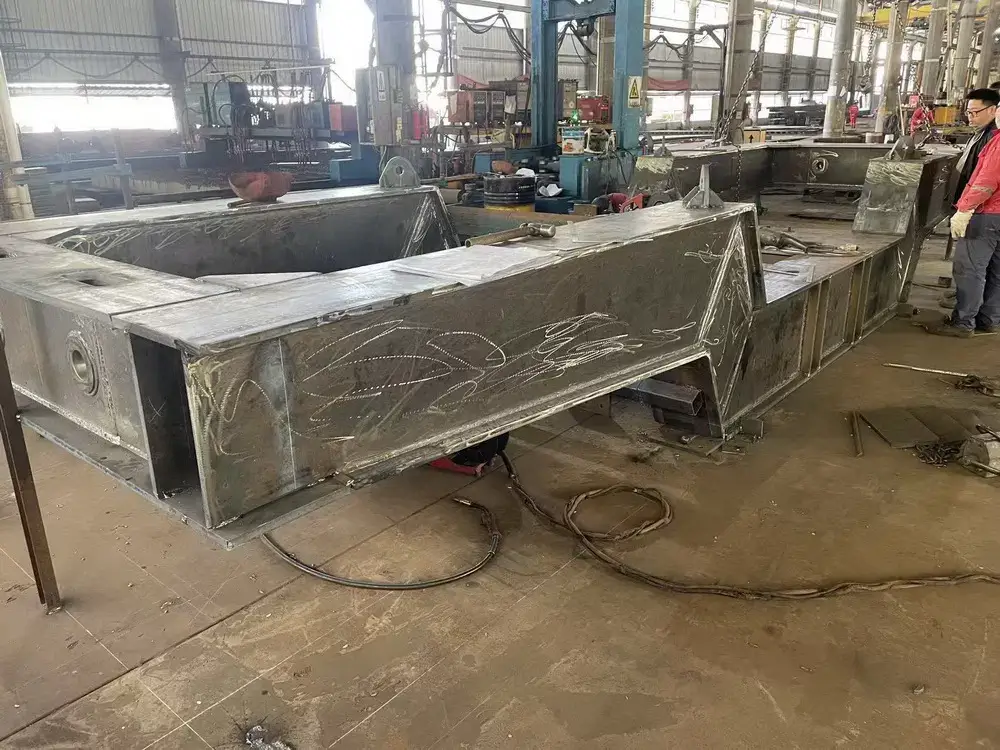
RH Engineering’s 10,000-square-meter workshop is equipped with advanced facilities including laser cutting machines and automated welding robots. This supports precise material cutting and strong welding consistency, both of which are central to quality assurance.
Skilled teams and process discipline ensure repeatable quality
Equipment alone is not enough. A dependable steel structure manufacturer also needs experienced technicians, supervisors, and quality inspectors. Skilled workers understand drawings, welding requirements, assembly logic, and acceptable tolerances. Process discipline ensures that each component follows the required production route rather than relying on guesswork or correction after the fact.
At RH, the company highlights a professional team involved in design, fabrication, and quality control. This matters because structural steel quality depends on cross-functional coordination, not just workshop output.
Inspection is built into each manufacturing stage
One of the clearest signs of a quality-focused manufacturer is that inspection happens throughout production, not only at the end. Good manufacturers inspect raw materials, cutting dimensions, fit-up condition, weld quality, assembly accuracy, coating quality, and final packing condition.
RH states that it has stringent quality inspection processes to ensure all components pass inspection before delivery. This is a strong quality message for buyers who want confidence in manufacturing consistency and shipment readiness.
What standards do steel structure manufacturers follow?
A professional steel structure manufacturer follows the standards required by the project, target market, and technical specification. Standards matter because they define how materials are selected, how welding is controlled, how tolerances are measured, and how finished products are evaluated.
Steel structure manufacturers often follow EN, AS, and ASTM standards
For export and international projects, common reference standards include:
- EN standards for European-related projects
- AS standards for Australian-related projects
- ASTM standards for American-related materials and project requirements
RH Engineering states that it specializes in overseas steel structures and steel formwork with EN, AS, and ASTM standards. It also notes that its welding and manufacturing processes comply with AS, EN, and ASTM standards, and that it can provide steel materials in accordance with European, Australian, and American standards.
This is important because standards are not interchangeable in every detail. A buyer should always confirm the exact project standard before manufacturing begins.
Standards influence more than material selection
When people ask what standards a steel structure manufacturer follows, they often think only about steel grade. In reality, standards influence multiple parts of the project, including:
- Material properties
- Welding procedures
- Fastener requirements
- Corrosion protection systems
- Fabrication tolerances
- Inspection criteria
- Documentation and certification
A qualified manufacturer must understand how these standard requirements affect manufacturing and final acceptance.
Why standards compliance matters for international buyers
Standards compliance is particularly important for overseas clients because structural steel often needs to satisfy engineering review, owner requirements, consultant approval, or third-party inspection expectations. If the fabricated product does not align with the required standard, the project may face rejection, rework, or delay.
For global buyers, choosing a steel structure manufacturer with export experience is valuable because such a supplier is more likely to understand documentation, packaging, quality control reporting, and specification-driven production.
Standards support quality consistency and buyer confidence
Following recognized standards helps ensure repeatability. It gives the buyer a common technical language for evaluating quality. It also provides a framework for inspection and acceptance. While every project still needs clear drawings and contract scope, standards help reduce ambiguity and improve technical confidence.
What is the quality control process in steel structure manufacturing?
The quality control process in steel structure manufacturing is a structured, multi-stage system that checks compliance from the beginning of production to final delivery. A strong quality control process helps ensure that each member is produced according to drawings, standards, and project requirements.
Below is a practical breakdown of the quality control process followed by a professional steel structure manufacturer.
1. Document review and production planning
The first quality control step is reviewing all technical documents before production starts. This includes approved drawings, material requirements, welding requirements, dimensions, standards, and delivery instructions.
At this stage, the manufacturer confirms:
- What must be fabricated
- Which materials are approved
- Which standards apply
- What tolerances must be met
- How the components will be marked and packed
This step reduces the risk of starting production with incorrect assumptions.
2. Material receiving inspection
Once materials arrive, they should be checked before entering production. This may include:
- Verifying heat numbers or certificates
- Checking dimensions and thickness
- Inspecting surface condition
- Sorting and labeling by type and specification
RH’s material workshop description emphasizes separate stacking by type and specification with labels affixed, which reflects a disciplined material management process.
3. Cutting quality control
Cutting is a foundational step because all later accuracy depends on it. Poor cutting leads to cumulative errors during fit-up and assembly. A professional steel structure manufacturer uses equipment and measurement controls to ensure correct dimensions and clean edges.
RH states that advanced laser cutting ensures precise dimensions and clean edges for all materials. This is exactly the kind of production capability that supports better downstream quality.
4. Fit-up and welding quality control
During fit-up, components are positioned and aligned before welding. At this stage, quality personnel typically check:
- Member orientation
- Joint preparation
- Gap and alignment
- Connection plate position
- Temporary fixing condition
After fit-up, welding quality control becomes critical. Weld quality directly affects structural strength and durability. Manufacturers typically control welding through process procedures, trained welders, and inspection checkpoints.
RH notes that robotic welding enhances joint strength, consistency, and overall structural integrity. Automated welding can help improve repeatability, especially when combined with proper process setup and inspection.
5. Dimensional inspection during fabrication
Quality control should not wait until the final product is complete. Important dimensions should be checked during fabrication to prevent errors from being carried forward. Examples include:
- Member length
- Hole location
- Web and flange alignment
- Plate positioning
- Bracket location
- Squareness and straightness
Intermediate inspection improves efficiency because problems can be corrected before painting or packing.
6. Trial assembly when required
For complex structures or export projects, trial assembly is an excellent way to verify that fabricated parts fit together correctly before shipment. It reduces site installation risk and gives the buyer more confidence in the finished product.
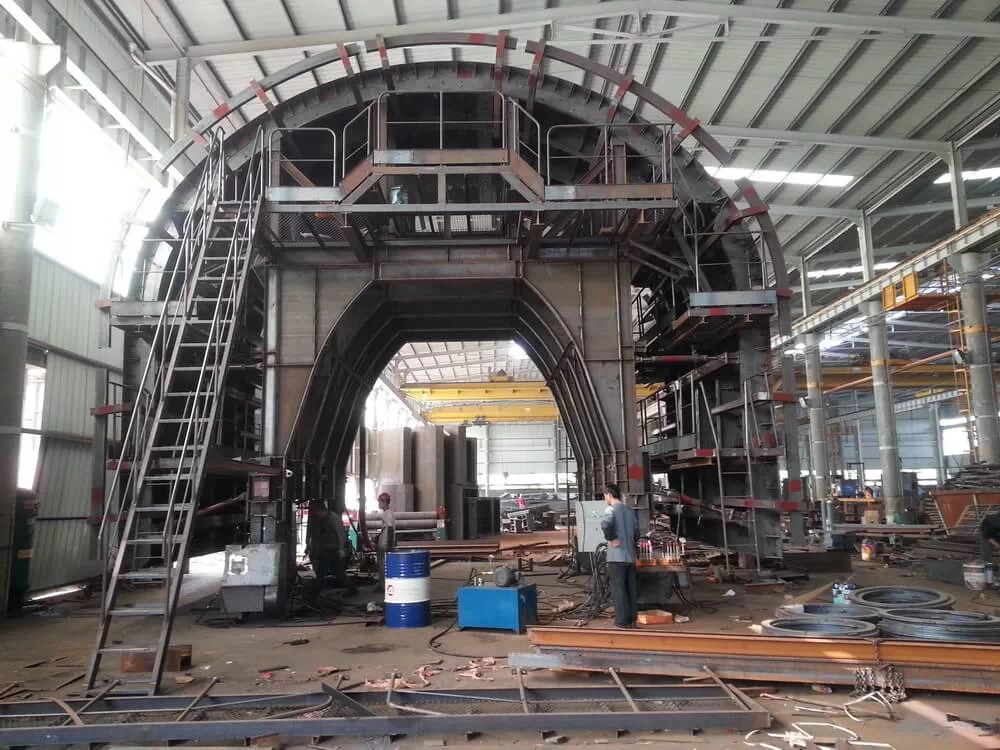
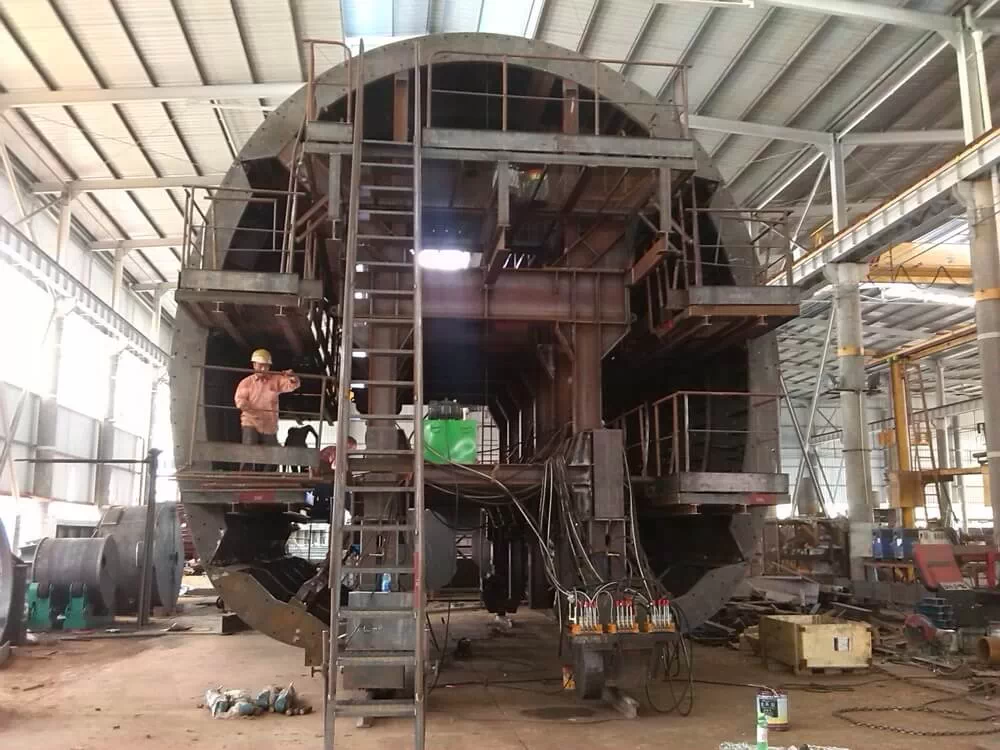
RH specifically states that its assembly workshop performs trial assembly to confirm that the product’s overall dimensions meet the drawing specifications. This is an important quality-control strength, especially for projects with tight tolerances or complex geometry.
7. Surface treatment inspection
After fabrication, steel components often receive painting or hot-dip galvanizing. Surface treatment quality affects corrosion resistance, appearance, and long-term service life. Quality control at this stage may include:
- Surface preparation checks
- Coating system confirmation
- Dry film thickness checks
- Appearance inspection
- Coverage verification
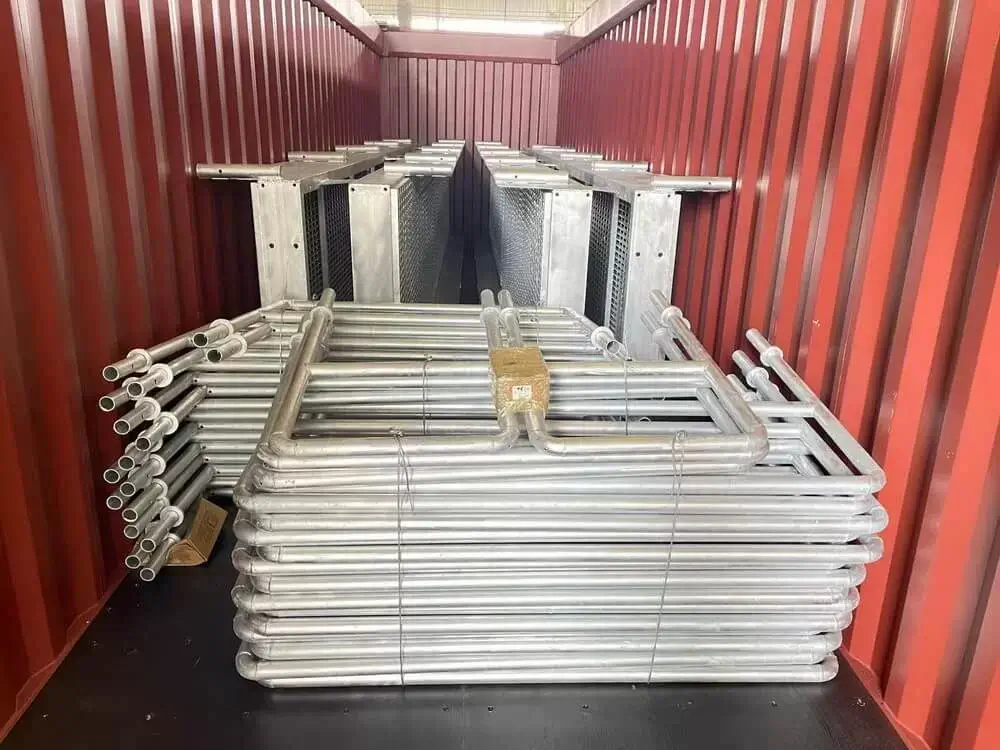
RH offers both painting and hot-dip galvanizing for surface treatment, which gives buyers flexibility based on project environment and specification.
8. Final inspection and release for delivery
Before shipment, a professional steel structure manufacturer carries out final inspection to confirm that all items meet drawing and specification requirements. This final check may include dimensions, weld appearance, marking, quantity verification, coating condition, and packing status.
RH states that comprehensive inspections guarantee each product meets standards and drawing specification, and that all components pass inspection before delivery. This aligns closely with what serious buyers expect from a quality-controlled manufacturer.
How is structural steel inspected before delivery?
Structural steel is inspected before delivery through a combination of dimensional checks, visual examinations, welding inspections, assembly verification, coating inspections, marking review, and packing confirmation. The goal is to ensure that every shipped component is correct, complete, and ready for site installation.
Dimensional inspection before delivery
One of the most important pre-delivery tasks is dimensional inspection. Even if the steel looks good visually, it must still match the approved drawing. Inspectors typically verify:
- Overall member length
- Plate position
- Hole size and location
- Section alignment
- Connection geometry
- Bracing dimensions
- Fabrication tolerances
Dimensional accuracy is vital because structural steel is prefabricated. Installation speed depends on fit-up accuracy at site.
Welding inspection before delivery
Welds are central to structural integrity. Before delivery, welding quality is commonly checked through visual inspection and, when required by project specification, additional testing methods.
Key welding checks may include:
- Weld continuity
- Weld size and profile
- Surface appearance
- Undercut, overlap, cracks, or porosity detection
- Conformance to drawing and welding requirements
Even where advanced equipment like robotic welding is used, inspection remains necessary to confirm execution quality.
Inspection of assembly condition
For projects involving trial assembly, the manufacturer can verify whether multiple components fit together as intended. This is especially valuable for complex structures, connection-intensive assemblies, and export projects where on-site correction would be expensive.
RH’s assembly workshop performs trial assembly to confirm overall dimensions meet drawing specifications. This is a practical pre-delivery control measure that helps minimize installation issues after shipment.
Coating and surface condition inspection
If the project includes painting or galvanizing, pre-delivery inspection should also check surface treatment quality. Common points include:
- Coating completeness
- Film thickness where applicable
- Surface appearance
- Damage or contamination
- Identification of repaired areas if needed
Proper surface treatment inspection improves long-term performance, especially in corrosive environments.
Identification, marking, and packing inspection
Before delivery, components should also be checked for identification and shipment readiness. This often includes:
- Member marking and labeling
- Quantity verification
- Packing method
- Bundle security
- Protection for edges and finished surfaces
- Loading sequence planning
Good packing and marking are not minor details. They improve unloading efficiency, reduce the risk of shipment damage, and help erection crews identify parts quickly at site.
Inspection before delivery reduces installation risk
A thorough pre-delivery inspection process saves money in the field. Every correction completed in the factory is usually easier and more economical than a correction made at the construction site. That is why experienced buyers prefer a steel structure manufacturer with a strong inspection culture rather than one that treats quality as a final paperwork exercise only.
Steel Structure Manufacturer Quality Control Table
| Quality Control Stage | Main Inspection Focus | Why It Matters |
|---|---|---|
| Drawing Review | Dimensions, materials, standards, details | Prevents fabrication errors before production starts |
| Material Inspection | Grade, thickness, certificates, traceability | Ensures correct raw materials are used |
| Cutting Inspection | Size accuracy, clean edges | Supports precise fabrication and fit-up |
| Fit-up Inspection | Alignment, joint preparation, plate location | Reduces welding and assembly problems |
| Welding Inspection | Weld appearance, profile, continuity | Protects structural integrity |
| Dimensional Check | Length, hole location, geometry, tolerances | Ensures on-site installation accuracy |
| Trial Assembly | Overall fit and assembly match | Lowers site erection risk |
| Surface Treatment Inspection | Coating coverage, quality, durability | Improves corrosion resistance and service life |
| Final Inspection | Quantity, marking, packing, overall compliance | Confirms shipment readiness |
What Makes RH Engineering a Reliable Steel Structure Manufacturer for Quality-Focused Buyers?
When buyers compare suppliers, they often ask what practical evidence shows that a company can deliver consistent quality. Based on the company information provided, RH Engineering presents several strengths that support its position as a reliable steel structure manufacturer.
1. More than ten years of practical experience
RH has over a decade of experience in steel structure, steel formwork, and construction equipment manufacturing and project execution. Experience matters because complex construction issues often require practical problem-solving, not theory alone.
2. 10,000-square-meter workshop with advanced equipment
The company’s modern production and painting workshop includes laser cutting machines and automated welding robots. This supports accurate cutting, stable weld quality, and efficient production management.
3. Comprehensive quality management system
RH emphasizes a comprehensive quality management system and strict quality inspection processes. This is important for clients who need dependable manufacturing performance rather than inconsistent workshop output.
4. Professional team across design, fabrication, and quality control
A capable steel structure manufacturer must connect engineering, production, and inspection. RH states that it has a professional team covering design, fabrication, and quality control, which supports better communication and execution.
5. Compliance with EN, AS, and ASTM standards
For overseas and specification-driven projects, RH’s ability to work with EN, AS, and ASTM standards is a meaningful advantage.
6. Trial assembly and pre-delivery inspection capability
RH’s workshop process includes trial assembly and comprehensive inspection, helping ensure that products meet standards and drawing requirements before shipment.
7. Logistics advantage
Located about one hour from the seaport, RH is well positioned for export logistics. Efficient delivery is an important part of quality from the customer’s perspective because delays and poor packing can undermine an otherwise well-manufactured product.
Best Practices for Buyers Working with a Steel Structure Manufacturer
If you want better quality results from your supplier, it helps to provide clear and complete project information from the beginning. Buyers can improve outcomes by doing the following:
- Provide complete drawings and specifications
- Confirm applicable standards clearly
- Define coating requirements in detail
- Clarify inspection expectations before production
- Request clear marking and packing instructions
- Ask whether trial assembly is needed for critical components
- Review quotation scope carefully to understand what is included
The relationship between buyer and steel structure manufacturer works best when expectations are documented, realistic, and technically aligned.
FAQ About Steel Structure Manufacturer Quality
What does a steel structure manufacturer do to ensure quality?
A steel structure manufacturer ensures quality by controlling design review, raw material verification, precision cutting, welding procedures, dimensional checks, trial assembly, surface treatment, final inspection, and shipment preparation.
What standards do steel structure manufacturers usually follow?
Many manufacturers follow project-specific standards such as EN, AS, and ASTM. The exact standard depends on the project location, engineering requirements, and client specification.
Why is quality control important in steel structure manufacturing?
Quality control helps ensure structural safety, fabrication accuracy, smooth installation, long-term durability, and compliance with project requirements. It also reduces rework, delays, and hidden costs.
How is structural steel inspected before delivery?
Structural steel is typically inspected through dimensional checks, weld inspection, assembly verification, coating inspection, marking review, and packing confirmation before shipment.
Does advanced equipment improve quality?
Yes. Equipment such as laser cutting machines and welding robots can improve precision, consistency, and production efficiency, especially when supported by skilled operators and strong inspection procedures.
Why is trial assembly useful for steel structure projects?
Trial assembly helps confirm that fabricated components fit together correctly before delivery. It reduces installation risk and is especially useful for complex structures and export projects.
What should buyers ask a steel structure manufacturer about quality?
Buyers should ask about standards compliance, inspection procedures, raw material control, welding capability, dimensional tolerance control, surface treatment process, trial assembly capability, and final pre-delivery checks.
Conclusion
A professional steel structure manufacturer ensures quality through a complete system rather than a single inspection step. Quality starts with accurate drawings and correct materials, continues through precise cutting and controlled welding, and is confirmed by dimensional checks, trial assembly, coating inspection, and final delivery review. Standards such as EN, AS, and ASTM provide the technical framework, but true project success depends on how consistently the manufacturer applies those requirements in real production.
For buyers in industrial, commercial, and civil construction, quality should be a core supplier selection factor. A trusted manufacturer helps reduce installation risk, improve project efficiency, and protect long-term structural performance. In this context, RH Engineering’s experience, advanced equipment, quality management capability, and commitment to inspection before delivery make it a strong partner for clients seeking reliable structural steel solutions.
CTA: Work with a Steel Structure Manufacturer That Prioritizes Quality
If you are looking for a dependable steel structure manufacturer for warehouses, industrial workshops, aircraft hangars, steel office buildings, supermarkets, or bridge-related projects, RH Engineering is ready to support your next project. With more than ten years of experience, a 10,000-square-meter workshop, advanced laser cutting and automated welding equipment, and strict inspection procedures before delivery, RH can provide high-performance steel structure solutions tailored to your requirements.
Send us your drawings, specifications, and project details to receive professional support for detailed design, material procurement, fabrication, surface treatment, quality inspection, and logistics coordination. If your project requires a steel structure manufacturer that values accuracy, standards compliance, and reliable delivery, RH Engineering can help you build with confidence.